Law Firm Marketing
Law Firm Marketing Channels (Part Four)
Updated: 02/17/2026

by Andrew Nasrinpay
Partner



Table of Contents
Strategy gives you the big picture. Tactics are where you roll up your sleeves and do the work. This section walks through the major marketing channels available to law firms today, from time-tested referrals to digital-first campaigns.
Not every tactic will fit every firm, and that’s okay. The goal here is to show the landscape, highlight what each approach can do for you, and give you a starting point for deciding where to invest. Think of it as a menu: you don’t have to order everything, but you’ll make better choices when you know what’s available.

Referrals
Referrals are still the backbone of legal marketing. For some firms, they’re the only source of business. Whether they come from other lawyers, medical professionals, or outside vendors, referrals are proof that your reputation and relationships are doing their job. The stronger your network, the steadier your pipeline.
Legal Referrals
- Partner with firms that don’t take on your type of cases. A family lawyer can send you workers’ compensation claims, while you send them custody matters.
- Build relationships with volume firms if you’re a trial shop, and vice versa. Many trial lawyers rely heavily on steady case flow from high-volume advertisers.
- Join bar associations and practice groups where referral opportunities happen naturally.
- Always pay referral fees promptly and transparently. (Word travels fast if you don’t.)
Medical Referrals
- Physicians, chiropractors, and rehab clinics often see injury clients before you do.
- Build trust with these professionals so they feel confident sending patients your way.
- Provide clear communication on case progress so referral partners know their patients are in good hands.
- Host lunch-and-learns or provide educational materials so they understand your role in recovery.
Tangential Vendors
- Accountants, financial advisors, union leaders, local business owners — all can be valuable sources of referrals.
- Don’t overlook community connectors like pastors, neighborhood associations, or nonprofit leaders.
- Show up in their world: sponsor an event, share their initiatives, or simply maintain a genuine relationship.
Past Clients
- Stay in touch after cases close through newsletters, seasonal updates, or check-ins.
- Make it easy for clients to share your contact info when someone in their circle needs help.
- Celebrate wins publicly so clients feel proud to say they worked with you.
Professional Services Network
- Build relationships with professionals who deal with client “life events”: insurance brokers, real estate agents, HR consultants, financial planners.
- Offer to be their go-to legal contact so they can look good by providing quick solutions.
- Keep the relationship reciprocal; send business their way when opportunities arise.

Print + OOH Advertising
Traditional media may not get the same hype as digital, but it still packs a punch — especially in markets where visibility matters as much as clicks. Print and out-of-home (OOH) campaigns are often about scale, consistency, and brand recognition. When done well, they can dominate a region and keep your name top-of-mind long before a potential client ever needs you.
Direct Mail
- Still effective when it’s targeted: postcards, letters, or newsletters aimed at specific zip codes, demographics, or even individual households.
- Works well for practice areas where public data can be used to tie into good potential clients (criminal defense being the best example).
- Consistency matters more than flash; one postcard won’t move the needle, but a steady stream builds recognition.
Sponsorships
- Local visibility through schools, sports teams, community events, or nonprofits.
- Not always lead-generators, but excellent for brand goodwill and building name recognition.
- Works best when it feels authentic, so sponsor the causes your firm actually cares about.
- The heavyweight of traditional media. Expensive, but nothing matches the reach.
- Billboards build broad awareness, dominate specific highways or neighborhoods, and reinforce brand recognition.
- Combine with other forms of traditional media (TV & Radio) and digital ads for maximum impact: people see you on the road, then search and click when they get home.
- Rotating messages (e.g., case results, slogans, taglines) keep campaigns fresh.
Online Profiles
Before anyone hires you, they’ll look you up. Your online profiles are often the first stop. These listings build credibility and feed your local SEO. If your profiles are inconsistent, incomplete, or outdated, potential clients may move on before you ever get the call.
Where to Focus
- Google Business Profile: The single most important listing. Keep hours, phone, services, maps, and photos current.
- Legal directories: Avvo, FindLaw, Justia, Super Lawyers. They reinforce credibility and help clients comparison-shop.
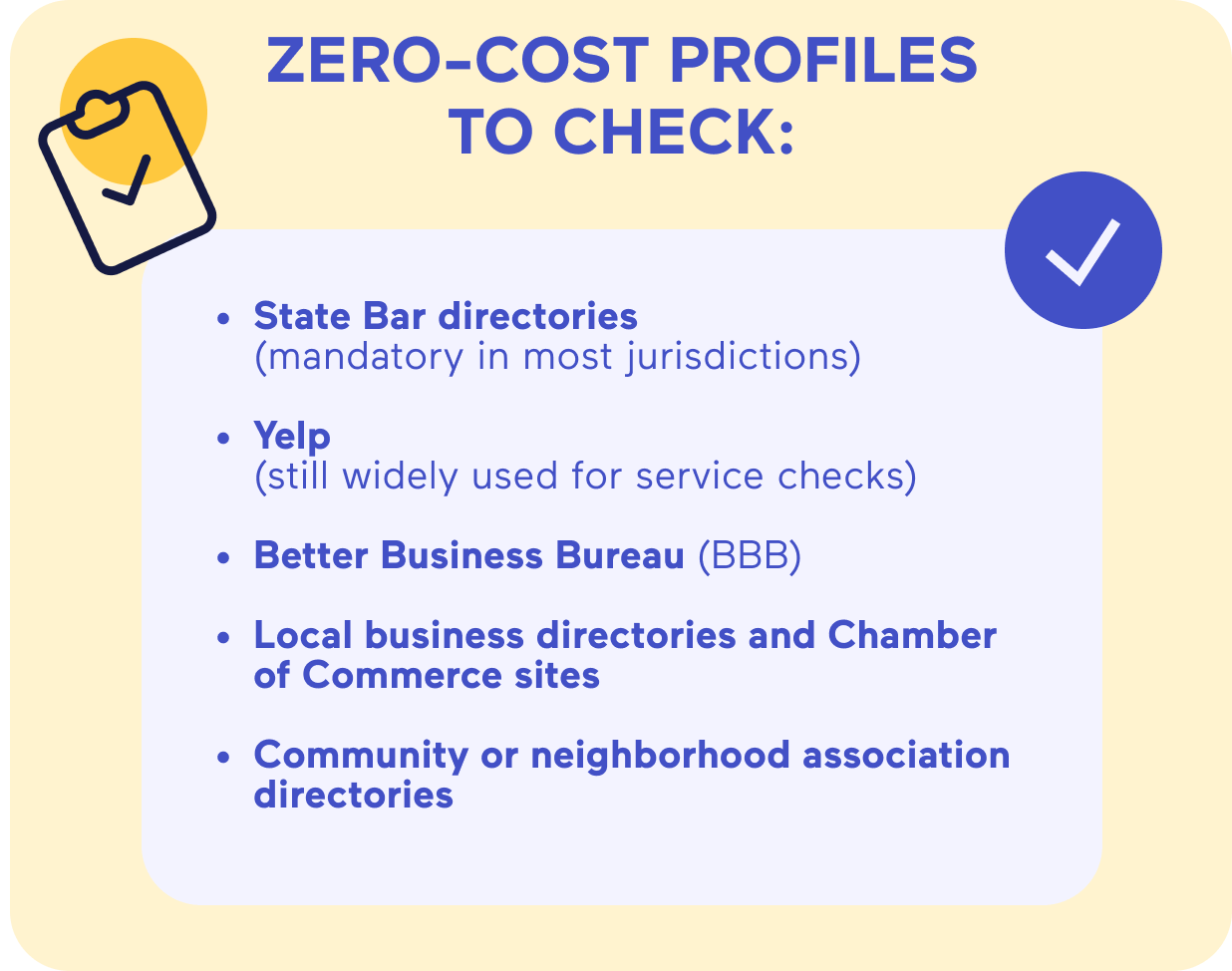
- General directories: Yelp, Better Business Bureau, local business directories. Still influential for reputation checks.
Best Practices
- Keep your name, address, and phone number (NAP) consistent across all profiles.
- Add photos, practice areas, and attorney bios wherever possible.
- Respond to reviews — good or bad — to show you’re engaged.
- Audit profiles quarterly to catch outdated info before it costs you clients.
Don’t Forget Free Listings
Not every profile requires a marketing budget. Claiming and maintaining your free online profiles ensures potential clients find accurate, consistent information no matter where they look.
Website
Your website is the digital front door of your firm. It’s often the first substantial impression a potential client has of you, and if it’s slow, confusing, or dated, you may never hear from them.
UX / UI Checklist
✅ Mobile-first design (more than 60% of legal searches happen on phones).
✅ Clear, visible calls to action (phone number, chat, forms).
✅ Simple navigation — people should find what they need in 2 clicks.
Website Speed
- Aim for pages that load in under 3 seconds. Anything longer and bounce rates skyrocket.
- Optimize images and code for faster load times.
- Use caching and a reliable host.

Search engine optimization is the long game. It takes time and effort, but it’s one of the most powerful ways to create sustainable growth for a law firm.
Strengthen Your E-E-A-T
- Experience: Show real-world case results and attorney bios.
- Expertise: Publish content that answers client questions in depth.
- Authority: Get backlinks from credible sites, bar associations, media outlets.
- Trustworthiness: Highlight reviews, testimonials, awards, and compliance.
Local SEO
- Optimize your Google Business Profile with photos, services, and regular posts.
- Collect reviews consistently; volume and quality matter.
- Build local citations in directories and community websites.
- Create localized landing pages (city- or region-specific).
Onsite SEO Technicals
- Clean title tags and meta descriptions.
- Schema markup to help search engines understand your site.
- Internal linking to guide both users and crawlers.
- Regular audits to fix broken links and outdated content.
Content Marketing
Content is how you prove you know your stuff before a client ever picks up the phone. Blogs, guides, FAQs, and videos give potential clients answers, build trust, and boost your SEO at the same time. The trick to content marketing is quality and consistency.
Ways to Use Content
- Answer real client questions in blogs and FAQ pages.
- Publish long-form guides for high-value practice areas (mass torts, med mal).
- Create video explainers or webinars that can be clipped for social.
- Refresh old posts so they stay current in search results.
- Build content clusters (main service page + supporting blogs) to dominate keywords.
- Repurpose top-performing content into multiple formats (e.g., blog to video to email).
Video Marketing
Video is one of the most engaging formats to connect with potential clients. People process visuals faster than text, and they remember faces and voices. Done right, video humanizes your firm and makes your brand memorable.
Types of Video
- Client Testimonials: Authentic stories in clients’ own words build trust.
- Explainer Videos: Short clips breaking down common legal questions.
- Attorney Profiles: Let people “meet” your lawyers before they ever call.
- Behind-the-Scenes / Culture: Show your team, office, and community work.
- Educational Shorts: Snackable videos for YouTube Shorts, TikTok, and Instagram Reels.
- TV & Commercial Spots: Traditional but still powerful for broad awareness.
Why Video Matters
- Builds trust faster than text or static images.
- Boosts SEO (Google favors video-rich sites).
- Increases conversion rates on landing pages.
- Performs well across multiple channels: websites, ads, social media, and even intake scripts.
Tips for Getting Started
- Keep it short (30–90 seconds is ideal).
- Use captions — many people watch on mute.
- Optimize for mobile viewing.
- Repurpose: turn one long-form video into multiple clips for different platforms.
Video doesn’t have to be expensive. Start with smartphone recordings for testimonials or explainer videos. Authenticity matters more than polish.
Social is where people live their lives — and where law firms can stay top of mind. You won’t always sign cases directly from Instagram or TikTok, but these platforms build recognition, trust, and community presence.
Key Tactics
- Social media advertising works especially well for certain practice areas (mass torts, class action plaintiff origination, first party insurance disputes, and lemon law claims)
- Match the platform to your audience: Facebook for PI, LinkedIn for corporate, TikTok for younger demos.
- Use short-form video for quick legal tips or firm updates.
- Showcase firm culture: behind-the-scenes, community events, staff highlights.
- Engage back! Comments and DMs are part of intake now, and a lot of folks do expect you to respond in kind.
Email may not be flashy, but it works. Newsletters, drip campaigns, and updates keep your firm in front of past clients, warm leads, and referral partners.
Smart Email Plays
- Lead nurture campaigns: automated sequences for new inquiries.
- Newsletters: monthly updates with resources, case wins, or firm news.
- Segment your lists: past clients, active leads, referral sources.
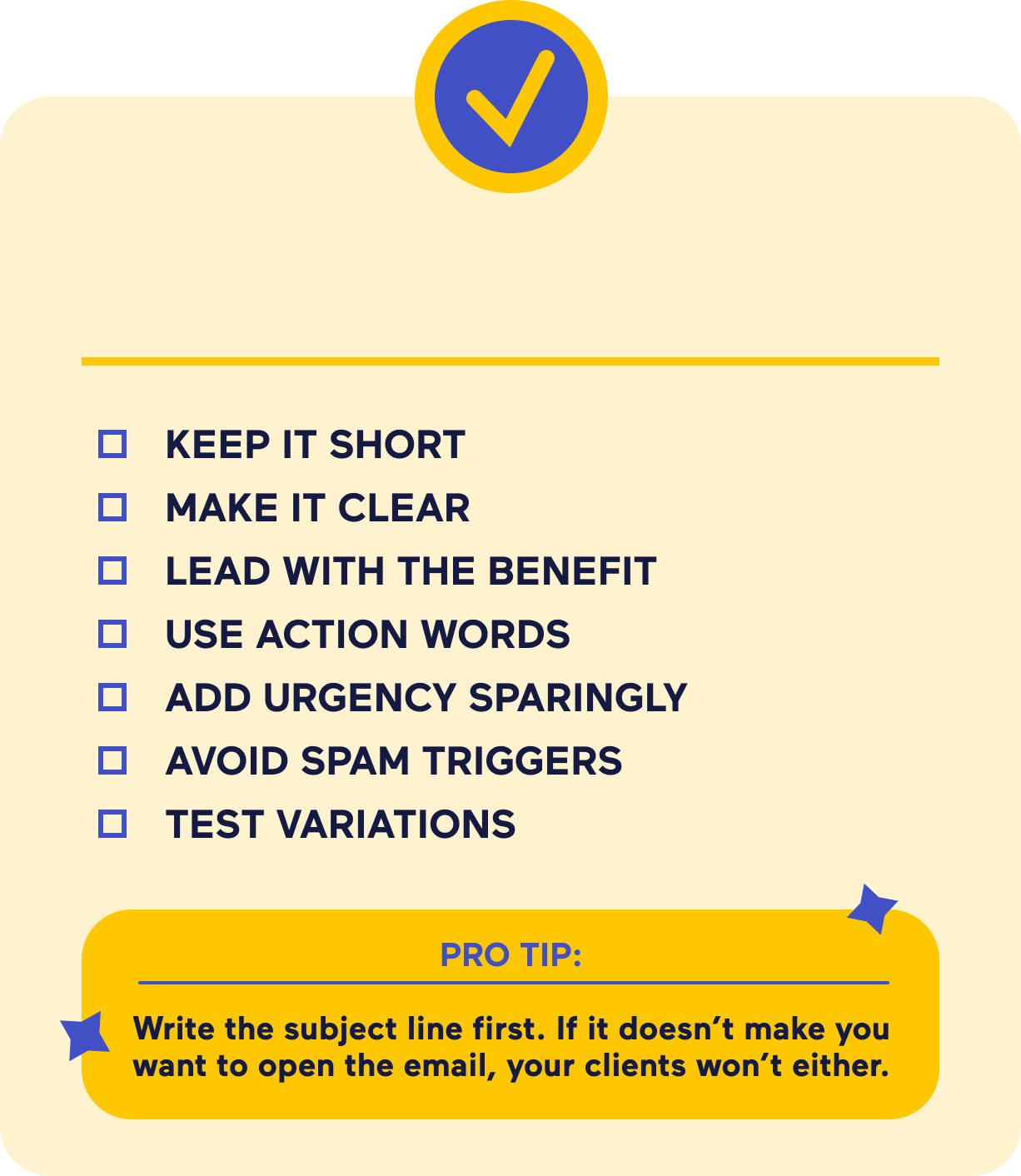
- Use clear subject lines: short, direct, benefit-driven.
- Track open and click rates so you know what’s working.
Smart Subject Line Checklist
PPC is where you pay to get in front of people who are actively searching for a lawyer. It’s competitive and expensive, but when managed well, it can deliver some of the highest-intent leads you’ll ever get.
Main PPC Channels
- Google Ads: Classic search ads targeting practice-area keywords. Expensive but essential in competitive markets.
- Google Local Service Ads (LSAs): Pay-per-lead format, appear at the very top of results. High trust factor. Is more likely to be the “first lawyer call” due to it’s proximity at the very top of search engine results pages.
- Bing Ads: Smaller reach but often lower cost-per-click. Worth testing for PI and niche practices that need incremental additional volume that already have Google Ads functioning well for them.
- Programmatic/display ads: Retargeting campaigns to keep your firm in front of past visitors.
- Social PPC: Boosted campaigns on Facebook/Instagram or LinkedIn to reach specific demographics.
Best Practices
- Set clear budgets by campaign type (search vs. LSA vs. retargeting).
- Track conversions, not just clicks.
- Use call tracking so you know which campaigns drive signed cases.
- Refresh ad copy and creative regularly to avoid fatigue.
Public relations builds credibility you can’t buy outright. Being quoted in the news, publishing thought leadership, or sharing firm milestones positions your attorneys as trusted voices.
PR Plays for Law Firms
- Press releases for major verdicts, settlements, or expansions.
- Media outreach to local or national outlets for commentary.
- Op-eds or bylined articles in relevant publications.
- Community news updates where you highlight your firm’s charitable or civic work.
- Podcasts and interviews — both guest appearances and your own show.
- Publicizing awards coverage, and when your attorneys or firm are recognized.
Awards Submissions
Awards may not directly sign cases, but they reinforce trust. Potential clients see “Super Lawyers” or “Best Of” logos and assume credibility.
Award Opportunities
- Super Lawyers / Rising Stars.
- Local “Best Of” awards in newspapers or magazines.
- National practice-specific recognitions (e.g., Top 100 Trial Lawyers).
- Industry lists like Chambers USA, Martindale-Hubbell, Lawdragon.
- Community awards (civic or nonprofit honors).
Tips for Managing Submissions
- Nominate strategically; not every award is worth the time.
- Leverage wins by adding badges to your website, bios, and ads.
- Share recognitions in press releases and social media posts.
Review Management
For most clients, reviews are the deciding factor. Before they call, they’ll Google your name — and what they see there can either seal the deal or send them to a competitor. Review management isn’t just about collecting stars; it’s about building trust, responding with professionalism, and showing you care about client experiences.
Core Review Practices
- Automate review requests at case close so every satisfied client gets a prompt.
- Monitor major platforms: Google, Yelp, Avvo, Facebook, and BBB.
- Respond quickly to both positive and negative reviews — silence looks careless.
- Highlight your best reviews on your website, ads, and intake materials.
- Use reviews to improve operations: recurring complaints point to real bottlenecks
Extra Credit
- Encourage video or photo reviews when possible — they carry extra weight.
- Ask clients to mention specific attorneys or staff by name; it personalizes feedback.
- Diversify! Don’t rely on just Google. A balanced profile across multiple platforms looks more credible.
Don’t Skip the Basics
A few tactics deserve quick reminders here. They’re so foundational that we covered them earlier in the guide, but they belong on this list too:
- Branding: Your brand is more than colors and logos — it’s how clients feel when they interact with you. Keep it consistent and client-focused across every channel.
- Analytics & Tracking: If you’re not measuring it, you’re guessing. Dashboards, call tracking, and attribution tools make sure you know which tactics are working and which are wasting money.
- Competitor Monitoring: Your competition isn’t standing still. Keep an eye on their ads, SEO moves, and media presence so you can adjust your own playbook.

our authors





Sources and References
- BrowserStack. (2025, July 1). How fast should a website load in 2025? BrowserStack. https://www.browserstack.com/guide/how-fast-should-a-website-load
Essential Law Firm Marketing Terms

A/B Testing: Running two versions of an ad, email, or page to see which performs better.
Attribution: Understanding which channel or campaign actually drove a signed client.
Bounce Rate: The percentage of visitors who leave your site without clicking further.
Brand Differentiation: How you make your firm stand out from competitors in tone, style, and message.
Call-to-Action (CTA): A clear prompt (button, link, phrase) that directs users to take the next step, such as contacting the firm or booking a consultation.
Call Tracking: Technology that shows which ads, campaigns, or numbers drove calls to your firm.
Click-Through Rate (CTR): The percentage of people who click on your ad or link after seeing it.
Content Marketing: Using articles, videos, guides, and FAQs to attract and educate potential clients.
Conversion: When a lead takes the desired action (calls, fills out a form, books a consult).
Conversion Rate: The percentage of people who visit a page or see an ad who then take a desired action (call, form fill, etc.).
Cost Per Acquisition (CPA): How much it costs you to land a signed client from marketing spend.
Customer Relationship Management (CRM): Software that tracks leads, follow-ups, and client communications.
Earned Media: Press coverage or mentions you didn’t pay for — news stories, interviews, features.
E-E-A-T: Google’s framework for ranking sites: Experience, Expertise, Authority, and Trustworthiness.
Geotargeting: Delivering ads to people in a specific geographic area.
Impressions: The number of times your ad or content is displayed (whether or not someone clicks).
Intake: The process of handling incoming leads, from first contact through signed retainer.
Key Performance Indicator (KPI): Metrics that measure success, like signed cases, cost per lead, or intake response time.
Keywords: Words or phrases that describe the topics your content and ads are built around. They signal to search engines what your page is about.
Landing Page: A standalone web page designed to capture leads for a specific campaign.
Lead Scoring: Ranking leads based on likelihood to convert so intake prioritizes the best cases.
Lifetime Value (LTV): The total revenue one client brings to your firm over the relationship.
Local SEO: Optimizing for local searches (“divorce lawyer near me”), Google Business Profiles, and directory listings.
Local Service Ads (LSAs): Pay-per-lead ads at the very top of search results with the green “Google Screened” badge.
Media Mix Modeling (MMM): A fancy term for a regression model that tests and analyzes the effectiveness of different spend percentages in different channels (TV, PPC, SEO, billboards) to see which combination produces the best results.
Organic Search: Website traffic that comes from unpaid search engine results.
Out-of-Home Advertising (OOH): Marketing outside the home, like billboards, buses, or transit ads.
Owned Media: Content you control directly — your website, blogs, email list.
Paid Media: Ads you pay for — PPC, social ads, TV spots, billboards.
Pay-Per-Click (PPC): Ads where you pay each time someone clicks (e.g., Google Ads).
Retargeting: Ads served to people who’ve already visited your site, reminding them to come back.
Search Engine Optimization (SEO): The process of improving your website so it shows up higher in Google search results. Includes technical fixes, content creation, and backlink building.