
On any legal marketing team, you’ll find different opinions about what strong law firm SEO content should look like. That’s not a bad thing. SEO combines research, strategy, writing, technical structure, and ongoing refinement. There is rarely a single change that makes a page perform well.
But the one thing most good SEO teams agree on is that optimization is not something you tack on after the copy is done. Strong law firm content starts with understanding what the searcher is trying to accomplish, what questions the page needs to answer, where the current content falls short, and how the page should guide a potential client toward the next step. From there, optimization becomes an ongoing process of reviewing, refining, and improving the content so it stays useful, current, and aligned with search intent.
At MeanPug Digital, we treat SEO as a process, not an item to check off a list. That is how we build content that helps law firms compete in search, earn trust with potential clients, and generate better opportunities over time.
What Optimizing Web Content for SEO Actually Means
Let’s start with one of the biggest misconceptions about SEO: optimization is not the same thing as simply adding keywords to a finished page. The optimization process has evolved considerably, particularly as AI-driven search has changed how information is discovered and presented.
Keywords still matter, but they are only one part of the process. Search engines are trying to understand whether a page is relevant, useful, trustworthy, and aligned with what the searcher actually needs. For law firms, that means content has to do more than include the right phrases. It has to answer the right questions, explain legal concepts clearly, organize information in a useful way, and help potential clients understand what to do next.
That work starts before the first draft. It shapes the topic, the page structure, the headings, the level of detail, the internal links, the calls to action, and the way the content fits into the broader website.
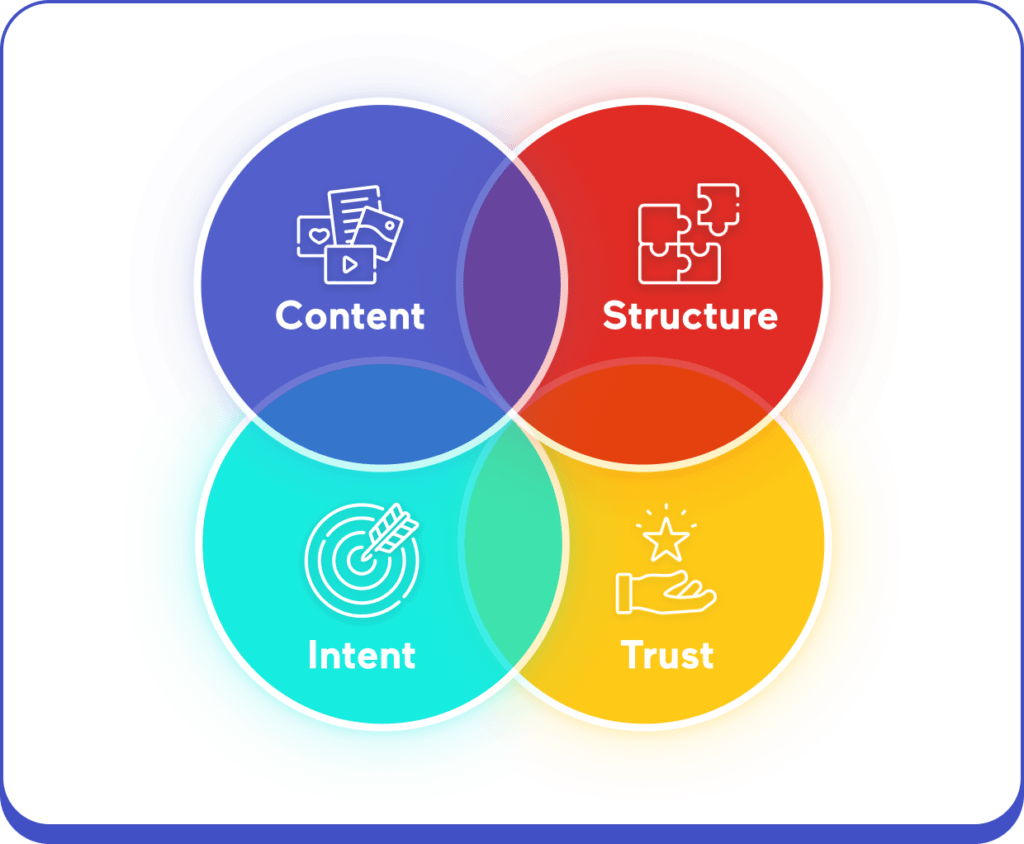
So when we talk about optimizing web content for SEO, we’re talking about the full strategy behind the page. Keywords play a role, but so do search intent, page architecture, topical depth, technical structure, user experience, and ongoing performance review.
For a more detailed explanation of how SEO works, read our definitive guide to law firm SEO.
Matching Law Firm Content to Search Intent
Old-school SEO was about getting as many keywords onto a page as possible. Modern SEO still uses keywords, but the bigger question is intent.
Search intent is the reason behind a search. When someone types a question or phrase into Google, they are trying to accomplish something. They may want to understand a legal issue, compare firms, find a lawyer in their area, or figure out whether they need to act quickly.
For law firms, that distinction plays a big role in how content should be structured. Four common types of search intent matter for law firm web copy:
Informational: Someone searching “what is a car accident claim” is probably trying to learn.
Local or service-based: Someone searching “car accident lawyer Chicago” is likely looking for legal help.
Comparative: Someone searching “best car accident lawyer reviews” is comparing options.
Action-oriented: Someone searching “file a car accident lawsuit Illinois deadline” may have a specific legal problem and be closer to taking action.
Each of those searches involves car accidents, but they generally won’t lead to the same kind of content. That is why search intent influences so much of the SEO process, including page type, scope, structure, headings, internal links, calls to action, and schema. The goal is to build the right content for the right searcher at the right stage of their decision.
Why Intent Matters for Law Firm SEO
Google is constantly evaluating which kinds of results appear to satisfy different searches. For some queries, users may want a clear educational explanation. Others may want a local service page, a comparison page, a video, a map result, or a page that helps them take action quickly.
If someone searches for general information about a legal issue, a detailed blog post may be the right fit. If someone searches for a lawyer in a specific city, a strong practice area page or location page is more likely to match what they need. If someone searches for a deadline, eligibility rule, or specific legal process, the content has to answer that question clearly and quickly.
This is why a page can be accurate and still fail if it’s built for the wrong purpose. A long educational article probably won’t perform well for a searcher who is ready to hire a lawyer. A sales-focused service page may not satisfy someone who is still trying to understand the basics of their situation.
Strong SEO content starts by asking the right question: what is this searcher trying to accomplish, and what kind of page would actually help them?
Why Law Firm Websites Still Need In-Depth Content
Not every potential client arrives at your website ready to call. People reach your site at different stages of their search journey. In-depth content can help potential clients understand complex legal issues, find answers to related questions, and decide what to do next. Legal topics often require explanation, context, examples, and plain-language answers to the questions non-lawyers are actually asking.
A lawyer may be able to explain a legal concept quickly because they work with it every day. A potential client may need more help. They may not know the legal terminology. They may not know which facts matter. They may not know whether their situation is serious enough to contact an attorney.
Strong law firm SEO content helps bridge that gap. Practice area pages usually need to explain the core service, answer common questions, build trust, and make it easy for someone to take the next step. Blog posts can address more specific questions, timely issues, niche topics, or early-stage searches that support the broader content strategy.
The goal is not simply to publish more content, but to build the right mix of pages so the firm can meet potential clients at different stages of their decision-making process.
Identifying and Closing Content Gaps on Your Firm’s Website
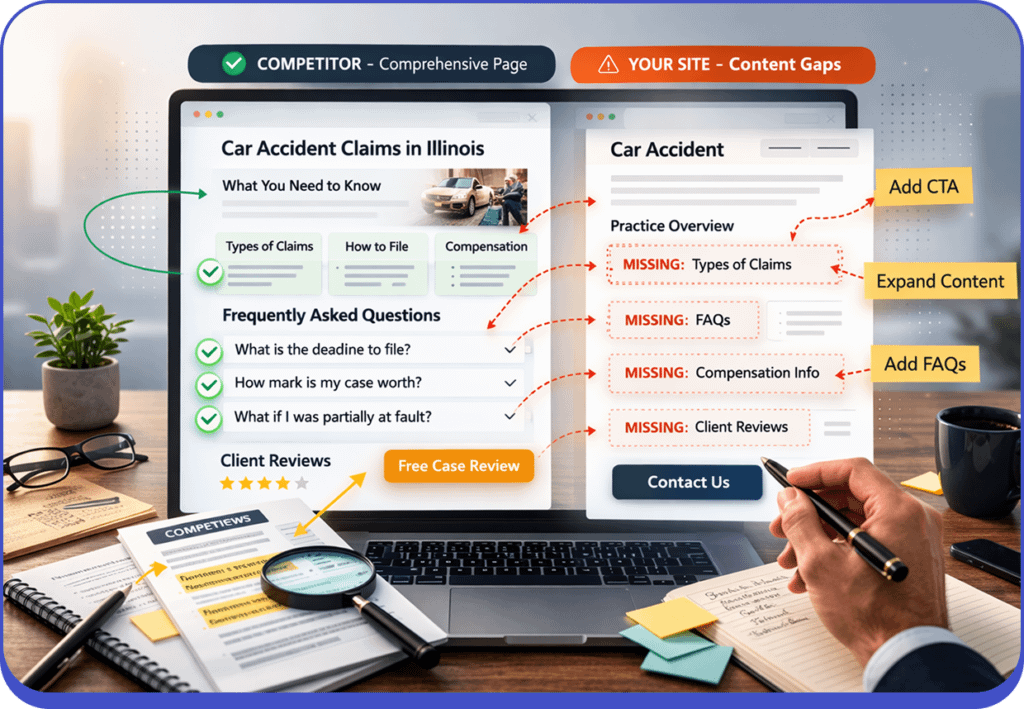
Once the basics are in place, including attorney bios, practice area pages, contact information, and core service content, the next step is usually a content audit. That means looking closely at what your website already says, how each page is structured, and how well the content addresses the searches your firm wants to compete for.
A content gap does not always mean the topic is missing entirely. The page may address the right subject but offer too little explanation, assume the reader already understands the legal issue, answer only part of the question, or bury important information without connecting it to the next step.
Your pages also do not exist in isolation. Any personal injury page, family law page, criminal defense page, or business immigration page competes against other pages that may answer the same questions more clearly, thoroughly, or usefully. Those competing results may come from other law firms, publishers, directories, government resources, or legal information sites.
The goal of a content audit is to find those gaps and determine what the page needs in order to be more useful, more competitive, and more aligned with the searcher’s intent.
What High-Performing Law Firm Pages Usually Have in Common
High-performing law firm pages tend to do more than cover the basic topic. They help potential clients understand the issue, recognize what may matter in their situation, and feel more confident about taking the next step.
Strong pages usually:
Answer common questions: Address the questions users are most likely to ask.
Anticipate confusion: Identify areas where non-lawyers may need additional explanation.
Use plain language: Explain legal concepts clearly without relying on unnecessary jargon.
Provide practical examples: Help readers understand how an issue may apply in real situations.
Follow a logical structure: Move from basic concepts to more specific details.
Reflect real search behavior: Account for how non-lawyers search, read, and make decisions.
Make the next step clear: Guide readers toward related information, a relevant service, or contacting the firm.
Remove ambiguity: Do not rely on implication or assume the reader already understands why the topic matters.
When a page falls short, it is not necessarily because the topic is wrong. More often, the content lacks depth, clarity, current information, useful organization, or context the reader needs. It may answer the first question but not the follow-up. It may use legal terminology without explaining it. It may assume the reader already knows why the topic matters.
What We Look for in a Content Audit
A useful content audit combines data, SEO tools, competitive review, and human judgment.
SEO tools can surface rankings, keyword opportunities, and technical issues, but they do not always explain why one page is more useful than another. This is why our content team also reviews pages manually. The firms you consider your business competitors are not always the same firms competing with you in search. That is why we look closely at who is ranking, what they cover, and how their pages are structured:
Topic coverage: Does the page address the questions and subtopics searchers expect to find?
Depth of explanation: Are key concepts explained clearly, or does the page assume the reader already understands them?
User comprehension: Does the page resolve confusion, or does it raise new questions?
Content emphasis: Is the most important information easy to find, or is it buried?
Context and framing: Does the page give non-lawyers enough background to understand why the issue matters?
Search intent alignment: Does the page clearly match what the searcher is actually trying to accomplish?
Conversion path: Does the page make it clear what someone should do next?
The goal is not to copy competitors. It is to understand what stronger pages are doing well and identify what your own page may be missing.
Why Law Firm SEO Content Requires Ongoing Optimization
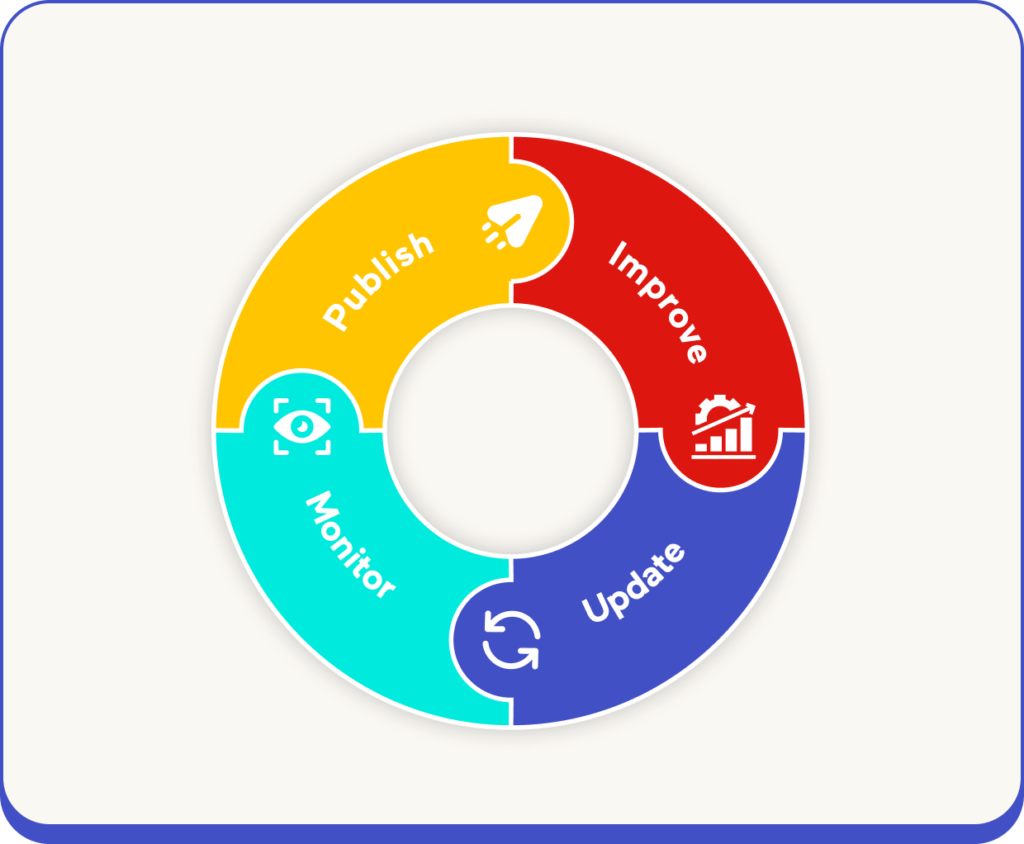
Publishing a new or updated page is not the end of the SEO process. It is the beginning of the next phase.
Once a page goes live, it needs to be monitored. Rankings, impressions, clicks, traffic, engagement, conversions, and lead quality can all help show whether the page is doing what it was built to do. A page may perform well quickly, require more time to gain traction, or need additional information, clearer structure, stronger internal links, better calls to action, or supporting content around related topics.
Ongoing optimization is also important because search results change. Competitors update their pages, laws change, Google rolls out algorithm updates, and searchers’ expectations evolve. A page that was strong two years ago may no longer be complete, current, or competitive.
That does not always mean your firm needs brand new content. Often, the better move is to improve what already exists. Updating older pages with clearer explanations, current information, stronger internal links, refreshed schema, better formatting, and more useful answers can help keep the site active, accurate, and competitive.
A strong law firm SEO content strategy is not just about publishing more. It is about knowing what to build, what to update, what to consolidate, and what to keep improving over time.
Law Firm SEO Content FAQs
How long does it take for SEO content to start working?
It depends on the market, the practice area, the competition, and the strength of the website. Some pages may show movement within weeks, but meaningful gains usually take months, not days.
Do blogs actually help my law firm’s SEO?
Yes, when they’re part of a larger strategy. Strong blog content can answer specific questions potential clients are already searching for, support core practice area pages, build topical authority, and create more opportunities for the firm to appear in search.
Will having AI-generated content hurt my site?
Not automatically. The bigger issue is quality. AI-assisted content still needs to be accurate, original, useful, reviewed, and aligned with the firm’s voice and legal obligations. Thin, generic, inaccurate, or unreviewed content can create problems, whether it was written by AI or by a person.
Why doesn’t my page rank if the information is accurate?
Accuracy matters, but it’s not enough on its own. A page may struggle if it doesn’t match search intent, answer related questions, use a clear structure, provide enough context, or compete with stronger pages already ranking for the same query.
Can SEO hurt my website if it’s done wrong?
Yes. Poor SEO tactics can hurt your website. Confusing content, outdated information, keyword stuffing, manipulative link practices, duplicated pages, or strategies that violate search engine guidelines can all create risk or hold a site back.
Is local SEO different from general content optimization?
Yes, but the core principles overlap. Local SEO also considers geography, proximity, local relevance, Google Business Profile signals, reviews, location pages, and local search behavior. The content still needs to be clear, useful, accurate, and aligned with what potential clients are trying to find.
Need a Stronger SEO Content Strategy for Your Law Firm?
Law firm SEO content should do more than exist. It should help the right people find your firm, understand their options, trust your experience, and take the next step.
That requires more than keywords. It requires search intent research, competitive analysis, strong writing, clear structure, technical optimization, ongoing performance review, and a content strategy that can grow with your firm.
At MeanPug Digital, we help law firms build and improve content designed to compete in search and connect with potential clients. If your website content needs a stronger strategy, we can help.
Ready to run with a different pack? Howl at us.