Episode Overview
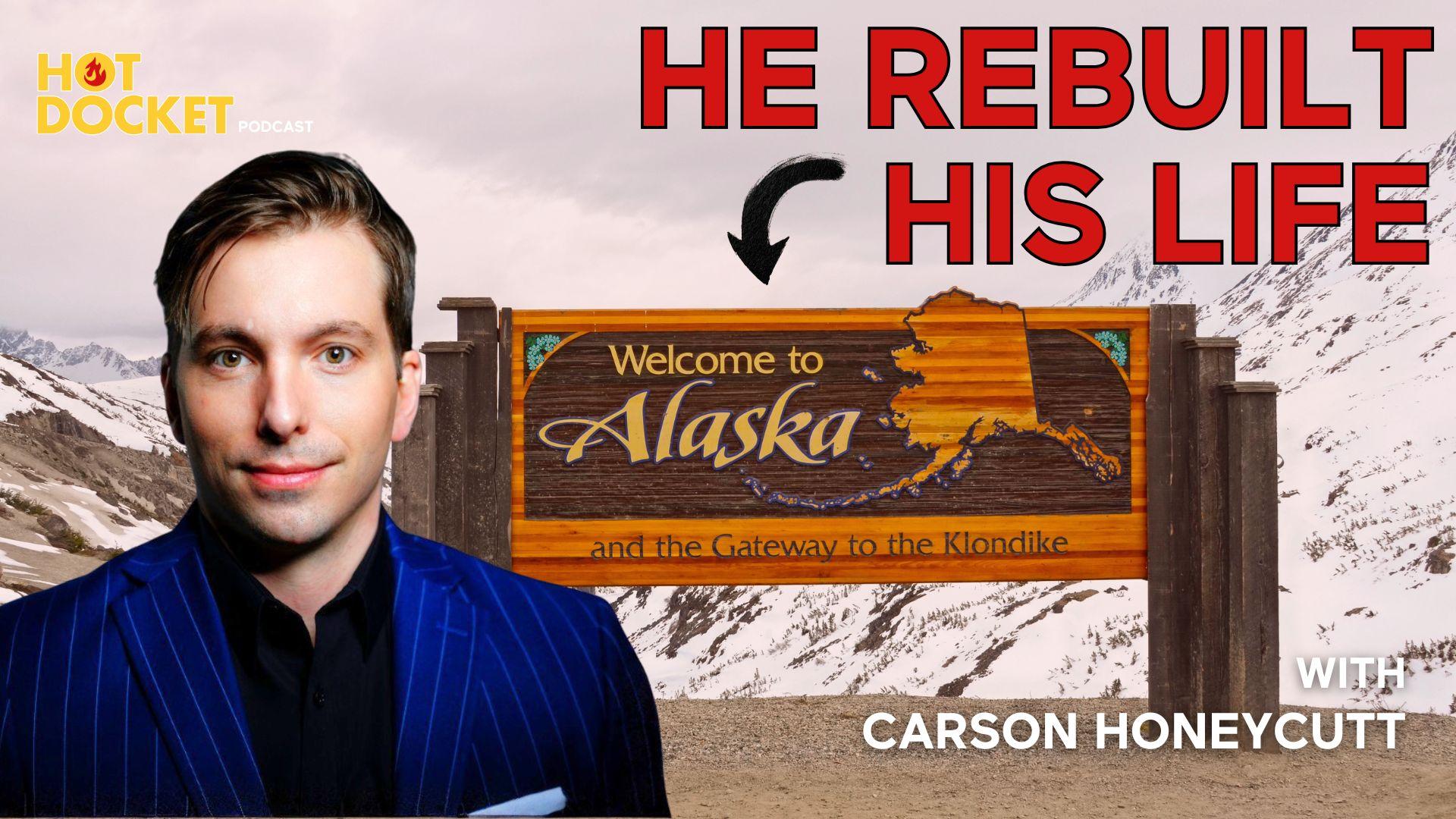
- Carson’s journey from the Marine Corps to becoming a lawyer in Alaska
- How military discipline translates to focus, integrity, and empathy in legal work
- The rise of Alternative Dispute Resolution (ADR) and why most cases never reach court
- What makes Alaska’s workers’ compensation system so unique — and challenging
- How AI and technology are changing the landscape of mediation and client service
- Why adaptability and emotional intelligence are now essential skills for attorneys
- The human side of law — what Carson learned from his military background about connection and communication
- Advice for lawyers seeking meaningful work-life balance in high-pressure fields
Episode Links
Want to hear more from elite lawyers and industry-leading marketers?
Follow us on Social Media for more
Episode Topics
- How Marine Corps values translate into modern law practice
- Why Carson chose Alaska—and what it taught him about clients and resilience
- How AI and ADR are transforming the future of legal work
- What every lawyer can do to stay relevant in a tech-driven, client-first world
- The surprising state of Alaska’s workers’ comp system
Episode Transcript
Expand Transcript


[00:00:00] Carson Honeycutt:
Anticipating human behavior is one of the hardest things that you can possibly do. And I would refer back to my time in the Marine Corps as my personal evidence of seeing that play out. I mean, people are unpredictable. I've been in Afghanistan 2009, 2010. I've seen some stuff that I was like, I never thought I would see this.

[00:00:18] Carson Honeycutt:
So if anybody tells you that they know the outcome of, of what's gonna happen in the courtroom, I would, I would say I. Think that it's good to be confident, but it's not good to be reckless, right? Saying that you can predict human behavior is a little reckless in my opinion.

[00:00:30] Bobby Steinbach:
Welcome to Hot Docket, the show where we talk about winning marketing strategies that have built the most successful law firms.

[00:00:36] Andrew Nasrinpay:
Join us every two weeks for the latest trends and tactics to grow your law firm.

[00:00:40] Bobby Steinbach:
Hey everybody, and welcome to this week's episode or biweekly episode of the Hot Docket Podcast. Today we have with us a very special guest, Carson Honeycutt of the Honeycutt Law Firm out of Alaska. Carson, thanks for joining us.

[00:00:54] Carson Honeycutt:
Thank you.

[00:01:00] Carson Honeycutt:
Thank you so much for having me.

[00:01:02] Bobby Steinbach:
So Carson does a lot of workers' comp and also a DR, which we had a little alternative dispute resolution, which we had a little conversation about before we pressed play. I would love for Carson to kind of just revisit what a DR is and why he's doing it in combination with workers' comp right now, because I think it's a pretty hot take.

[00:01:23] Bobby Steinbach:
Um, so Carson, I'm gonna turn it over to you.

[00:01:26] Carson Honeycutt:
Yeah. So, uh, I, I've started in litigation and workers' comp doing primarily that. And what I realized over time is that there are one more cases and there are attorneys to take those cases and those cases still need to be resolved. And frequently if there's not somebody to come in and, and assist with that process, uh, people are just kind of gutting each other the entire time and not really necessarily knowing what direction that's headed.

[00:01:49] Carson Honeycutt:
So alternative dispute resolution is a. Is a solution for that. Now, alternative dispute resolution takes many different forms. Uh, the two most prevalent are arbitration and mediation, and you can't find many contracts these days that don't have an arbitration clause in it. And arbitration's more formal.

[00:02:07] Carson Honeycutt:
Mediation is more informal. And the reason that I, I personally tend to focus more on mediation is because of the informality of it. It allows the parties to kind of take their destiny back into their own hands and remove it from potentially a disinterested party, a disinterested party or adjudicator like a judge or an arbitrator, and put it, put the power back in the hands of the parties to come to a reasonable conclusion before somebody else decides their future, kind of maybe potentially against their will.

[00:02:33] Bobby Steinbach:
One, one of the reasons I thought your take was very interesting is you basically said. You think the way lawyers practice today is largely gonna go by the wayside with AI coming into play and people being closer to the law and like allowing AI or AI allowing people to have more of a finger on the pulse of the law.

[00:02:54] Bobby Steinbach:
And I think, like, the thing that that's very interesting to me about that statement was we, we read, I think a while ago, uh, running with the Bulls. It's like that, who was it by? Yeah, by by Nick Rowley. Um, and one of the things that stuck with me from that book was, and I've heard it since then, a couple of times, it seems like these, like heavy hitting PI trial attorneys.

[00:03:18] Bobby Steinbach:
Tend to think mediation is a huge waste of time. Like it's something ordered by the judge as part of the process, and nothing ever really seems to come from it. And that, that is how I think of mediation now because I've, I think I've been slanted by like that mindset. What would you say to, to folks like that?

[00:03:34] Carson Honeycutt:
Well, you know, and you guys do marketing, right? It's not a question of what the, the product. Provider thinks it's a question of what the product consumer thinks. And I think that this has been a huge flaw within the legal communities. We, we've kind of become a self licking ice cream cone, which is where we, we develop this mindset that we, this is the way it's gotta be.

[00:03:56] Carson Honeycutt:
And we tell people that that's the way it's gonna be. And what people are saying by and large is that we don't trust attorneys and we don't trust their opinion. And it's because it's so divorced from reality and the reality that I live in as a consumer of legal services, I don't want. To use a lawyer.

[00:04:11] Carson Honeycutt:
Right. I don't want to pay you that amount of money to do something that's gonna expose, you know, my butt to the entire world. Right. And you can look at cases, there's, there's so much reputation risk now, especially with litigation, that seeing mediation is a waste of time. A lot of people want their stuff to be secret and stay secret and stay private.

[00:04:33] Carson Honeycutt:
And so the legal community has kind of been driving litigation towards the courtroom. And consumers are now more informed than ever, and AI is increasing the accessibility to law and legal concepts. People can get up to speed on something like stare decisis, right? And they can look that up and they can figure it out for themselves.

[00:04:52] Carson Honeycutt:
They can get a law school degree in that narrow field. Fair in fairly short order, and I can hear the gros in the room. I can hear lawyers deflating being like, no, no, no, no, no. We think differently. We are special and unique. And the reality is, is that people are gonna be able to get up, get up to speed, and what is gonna be needed.

[00:05:12] Carson Honeycutt:
Is the human touch, and, and it's not just me saying that people don't trust. Lawyers above the law has a great article from 2014, 11 years ago, we identified this problem and a lot of attorneys are just going, la, la, la, la, la, la, la, la, la. Don't want to hear it. And that's what the consumer wants. They don't want to pay you 500, a thousand dollars an hour to put their business out in public so that you can look really cool and get in the newspaper when you get this multimillion dollar judgment.

[00:05:42] Carson Honeycutt:
That's not what the consumer wants in all cases.

[00:05:45] Andrew Nasrinpay:
What do you think are gonna be the most common? Cases that go to a DR that the consumers are gonna drive and push that way.

[00:05:52] Carson Honeycutt:
Yeah. Well, I mean, certainly things where like you're having like small disputes between, you know, like neighbors would be a great example.

[00:05:59] Carson Honeycutt:
You know, I think real estate type type of transactions, things where there's a, there's a tangible transaction that needs to be resolved and you've maybe got a dispute, you know, one way or another over some, some amount of dollars. I think you're gonna be able to see those resolved in a DR more often. Uh, I think where you're less likely to see it.

[00:06:17] Carson Honeycutt:
Is in areas where there is third party indemnification contract, where there's an insurance contract, because I think that the insurance companies still have enough money and are entrenched in the way that they do business enough that they're not necessarily gonna want to come to the mediation table.

[00:06:35] Carson Honeycutt:
They're gonna be kind of forced, forced there at gunpoint, for lack of a better term. So, uh, I I, anything where you're seeing consumer to consumer. Uh, issues. I think that that's gonna be the first place where it starts. But I think once that trend begins, people are gonna say, Hey, this is actually way more cost effective and this is resolving it quicker.

[00:06:54] Carson Honeycutt:
And it's also not increasing our exposure to reputational risk. And then, you know, if, if we're talking about bigger organizations, potentially regulation risk, right? Because if a story becomes big enough and enough people get outraged, we've seen that. Public sentiment can drive regulation, can drive legislation that would then remove that.

[00:07:16] Carson Honeycutt:
And that's a big risk. And that's one that I think most attorneys are not addressing with their clients when they're talking to 'em is, Hey, if this story blows up, there's, there's a lot more at risk than just the $10 million here. Right. And, you know, as just a, a business case, I mean, look at Volkswagen, when they got caught with their, uh, overstating their fuel economy on their vehicles.

[00:07:38] Carson Honeycutt:
They didn't recover for that for years. And now they sell electric vehicles. So. That is, that is where I see it. Does that answer your question?

[00:07:47] Bobby Steinbach:
I, I think, yeah, I think that's a great answer. So what would you say to lawyers who are rolling their eyes and like groaning and saying that's not where this is going?

[00:07:56] Bobby Steinbach:
Do you think those people are out of a job, or do you just think that their approach changes their sales, maybe their marketing material changes? Like how do you see those people, their role evolving?

[00:08:09] Carson Honeycutt:
It is not that they're gonna be out of a job, it's just they need to be aware that I think that their market is shrinking.

[00:08:13] Carson Honeycutt:
Right? It's not gonna be as robust. There's still gonna be a role there, and what they really need to put in their head is that the, that the law, the, the courtroom is not gonna be the center of gravity. In law anymore. A lot of legal education is geared towards prepping for the courtroom, and that's happening less and less and less and less.

[00:08:34] Carson Honeycutt:
And we're seeing that in workers' comp in Alaska. I mean, there was a, you know, once upon a time, it was recently as two decades ago, pretty much everything was ending up at a hearing. Now, 90% of cases are resolved via settlement or mediation. So if that's, if that's an indicator of a heavily litigated field, that does involve insurers, by the way.

[00:08:53] Carson Honeycutt:
So, I mean, that's even counterintuitive to what I just said. For those of you who are paying attention, if you're seeing it there, it's not too far of a cry to start seeing it in personal injury. It's not too far of a cry to start seeing it in all these different areas. Certainly in business law, I mean business law there, like I stated earlier, most contracts have an arbitration clause in it.

[00:09:12] Andrew Nasrinpay:
Yeah. Or some

[00:09:13] Carson Honeycutt:
type of alternative dispute resolution clause.

[00:09:15] Andrew Nasrinpay:
I, I think you're gonna see it first at the smaller claims, but I, I'm curious to hear your thoughts on like where you think those bounds are, because if it's too small, nobody is gonna go all the way through with this, but if it's too large, you're, you're more likely to have parties that are gonna wanna litigate.

[00:09:34] Carson Honeycutt:
Yeah, I think, I think anytime that you have private entities. Versus private entities, you're more likely to see it. If it's private versus government, I think you're less likely to see it. Right. If there there's any type of governmental involvement in it, I think that that's less likely to be the case because somebody's actually trying to change something or there's some type of, you know, you know, justice element to it.

[00:09:56] Carson Honeycutt:
I think that's less likely. Um. It's hard. I don't think you're gonna see class actions go by the wayside in, in this type of environment. I think class actions will still continue functioning the way that they're functioning. Uh, but again, this is my, some, this is a speculative guess on my part, but I can already see the winds changing.

[00:10:15] Carson Honeycutt:
But I don't know that I can give you a firm answer on what the boundaries are. But I think your, your intuition is correct, that smaller stuff's gonna be. Dealt with via mediation. 'cause you know, the, the cost benefit analysis is, is this gonna be worth the hassle? And the cost benefit analysis that most people are doing that are writing checks in these cases is they're saying, well, is it gonna cost me more to pay my attorney to deal with this?

[00:10:36] Carson Honeycutt:
Or could I just write this check? You know, go to mediation today, write a check, be done with it, know that it's closed to not deal with any of the stress associated with, with being involved in litigation. And I don't know that there's a dollar amount for it, but more of a, a stress and outcome boundary to it.

[00:10:53] Andrew Nasrinpay:
Yep. I, I think we've seen a couple of very interesting mass arbitrations. Mm-hmm. Where, yeah. You know, it's something that would've traditionally been a class action, but because of the ar arbitration clauses in there Yeah. The attorneys end up filing.

[00:11:09] Bobby Steinbach:
Some of them are very weird. Like, it, it, it makes sense, some of the things that seem like class actions that become mass ARBs where it's like a minor defect or something to that effect.

[00:11:17] Bobby Steinbach:
But we saw one, I think it was like Arby's waiters and waitresses that weren't being paid full wages, uh, because they were around tips and all that other stuff and it was being pursued as a mass arb.

[00:11:29] Andrew Nasrinpay:
Oh, I, I, I didn't see that. That was the first

[00:11:30] Bobby Steinbach:
one we ever saw. In fact, I think it was close to two and a, two and a half or three years ago.

[00:11:36] Bobby Steinbach:
When we built like all that self signup tooling. Um, but yeah, it, it is kind of shocking. I, I want to completely, not completely change the subject, but somewhat change the subject. I saw Carson that before being a lawyer, you were a Marine Corps sergeant. Yeah. How did that prepare or completely un prepare you for becoming a lawyer?

[00:11:58] Carson Honeycutt:
I, it, it did both right? It, there's nothing that fully prepares me for being an, being an attorney. I'll, I'll, I'll grant that. It has been a total, I had to like rewire my brain 'cause I didn't step on a law school campus till I was in my thirties and I had already had, you know, this Marine Corps experience and then a career into business development prior to that.

[00:12:16] Carson Honeycutt:
So, as far as the Marine Corps preparing me, on the one hand, you know, it prepared me because I can. Relate to people better. A lot of people when they see the military, they think, kind of think it as this, you know, uh, it's this monolithic group of people that are all pretty, you know, homogenized and standardized.

[00:12:34] Carson Honeycutt:
And the, the reality is it's not that way. The, there's all different walks of life. Every socioeconomic demographic you can think of in the US is represented. Within the military and specifically the Marine Corps. I mean, it's a wild group of people and you wouldn't think that these people would mesh together to accomplish missions in the way that they do, but they do.

[00:12:53] Carson Honeycutt:
So in that regard, it prepared me because it gave me an understanding of the human element. And I think that that's something that's very divorced from legal education. So I think it prepared me for the reality of practice. Now, what it didn't necessarily prepare me for. Is some of the, the, the nuance that you get within the, within an actual legal thinking.

[00:13:13] Carson Honeycutt:
You know, I'm, I'm, I tend to be a little bit more straightforward, direct and to the point. And then there's a whole world of legal thought. It like, well, you know, it's, it's very gray, it's very mushy and you know, the Marine in me doesn't like that. Right? I don't like that mus, I like that mushiness. I like certain outcomes.

[00:13:29] Carson Honeycutt:
So it didn't prepare me for that. And that was the main rewiring is like, okay. I have to, I have to account for this squishyness where it's like, you know, maybe I can't say exactly what I wanna say and, and be as direct as maybe I wanna be. Uh, just because either I have my client's interests or I have, you know, I'm trying to create leverage.

[00:13:50] Carson Honeycutt:
And to me, even at times now, I'm, you know, it's hard to divorce that Marine Corps mindset from what I'm doing now.

[00:13:57] Bobby Steinbach:
I think talking about that human element reminds me, kind of weirdly of a conversation we had at Smart Advocate Connect a couple of weeks ago, week ago. Um. Lawyers listening to this might hate this, but the guy we talked to was an ops guy and he said something to the effect of law school breaks, people's brains.

[00:14:15] Bobby Steinbach:
Like, uh, and specifically he was talking about his lawyer, like he was his managing partner, I guess, and saying somehow law school didn't break that guy's brain. Like he still maintained like the business mindset and could talk, talk to people and listen. So I think everything you're saying Carson, around like the part of it that did not prepare you.

[00:14:36] Bobby Steinbach:
Kind of mirrors Yeah. What we, what we've heard.

[00:14:39] Carson Honeycutt:
Yeah. It, it certainly makes me more effective as a, as a business professional for business professional within the legal field. And that's very much how I tend to think of myself is I'm a business professional who has a law license so that. I do agree with that sentiment that the law school breaks people's brains.

[00:14:56] Carson Honeycutt:
It kind of, it, it has the tendency to divorce people from reality and they, they develop this new kind of way of thinking and they see everything through the lens of case precedent. And to me, it, I, I think that's a dangerous mindset to have because it's relying, uh, in a, in a. Kind of weird way. It's deferring all of your thinking to a judge.

[00:15:20] Carson Honeycutt:
And the only thinking that I have now is what's here on this paper, in this very narrow set of circumstances. Uh, I'm not saying that you need to ignore case law. That's not the point that I'm making here. The point is, is that reality and the law, law tends to follow society and not the other way around.

[00:15:36] Carson Honeycutt:
Uh, again, lawyer, they're probably lawyers are screaming that disagree with me on that point, but. I'd be happy to debate him on that, you know? But devil's advocate I, yeah, devil's advocate. That would be the perfect place for it. So if you only think in the world of the world in terms of case precedent and stare decisis and you know, all of these, you know, legal fictions that, that exist for the purpose of making the law system work.

[00:16:04] Carson Honeycutt:
That's a, I think it's frankly, a dangerous mindset to have. 'cause you can't see other possibilities. You can't think outside of that. Box, and then you become very inhumane towards other people and you stop seeing these, you know, potentially clever solutions. And that's again why I like dispute resolution as opposed to litigation is dispute resolution.

[00:16:20] Carson Honeycutt:
The whole, the, you know, at least for mediation, you have a whole world of possibilities. We can come to our own type of agreement, we can totally shift things. Just because we've been fighting each other doesn't mean we have to keep doing that. We don't have to be competitors. We can become co-operators.

[00:16:34] Carson Honeycutt:
We can come to a new solution. 'cause you know, in, in what I advise people is like, look, this person on the other side of the issue, as you is just as interested in the issue as you are. They maybe have a different, uh, end state that they would prefer, but they're the only other person that maybe cares about this as much as you do.

[00:16:52] Carson Honeycutt:
If you can then turn that into a cooperative environment and acknowledge that they've got reasonable points, you can actually make something better. If you adopt that mindset. But if we go in with this litigation based mindset that I have to win, I think that that's, uh, that's dangerous. And I think we're kind of seeing that mindset trickle out into our society now and how, how difficult that is to manage when everybody's operating that way.

[00:17:16] Carson Honeycutt:
I

[00:17:17] Bobby Steinbach:
don't disagree. For the most part. Yeah. I think it's, don't me

[00:17:21] Carson Honeycutt:
wrong, there's still the righteous, cause that still exists. And I think it's also like,

[00:17:24] Bobby Steinbach:
like, you know, we are in the world where we're seeing people who have been killed by trucks. Like there's truck accidents. Yeah. And I don't, I think it, it's hard to imagine the victim coming to the table with the insurance company and being like, let's work together to find a solution.

[00:17:40] Bobby Steinbach:
You know what I mean? Everybody's just watching their As at the

[00:17:42] Andrew Nasrinpay:
same time, I could see this being the solution for. The vast majority of soft tissue, like a, no, not even pi. Oh, you're just saying in general. Yeah, in ge. I would think PI is probably one of the last places that this would touch

[00:17:55] Bobby Steinbach:
because of everything Carson's saying or end up being like justice based and insurance.

[00:17:59] Bobby Steinbach:
Yeah. You're talking about the hard money. I'm talking about the soft feeling, but yeah. Yeah. You guys are both

[00:18:05] Carson Honeycutt:
right. Right. On the one hand, you've got the person who wants justice need. That was very well done there. We need, we need Carson

[00:18:11] Bobby Steinbach:
GPT to live in our office. Yeah, yeah,

[00:18:13] Carson Honeycutt:
exactly. You guys are both right.

[00:18:14] Carson Honeycutt:
I mean, you've identified the both sides of the problem and why. PI's probably gonna be a, a late move. To the movement just because you've got a justice interest on one side, to your point, like if, you know, like a, a van full of kids gets crushed by an 18 wheeler, right? Like that's. Horrifying. And then you've got an insurance company that doesn't wanna write a check and has denied any type of culpability or that they deny any type of payment.

[00:18:38] Carson Honeycutt:
You know, delay, deny, defend the typical insurance strategy. And that just gets people irate. Yeah. When, when they're dealing with it. And so by the time you even come to the table, everybody's so mad that they can't even think straight. Uh, yeah. It's problematic. But I would, I would offer to you that that's precisely why you might need a mediator before it becomes a bloodbath in the courtroom, because.

[00:19:00] Carson Honeycutt:
The concern and the risk associated with taking things to the courtroom is you leave it up to people that you don't know, that aren't as interested in the problem as you are, whether that be a jury or a judge, and you're banking on being able to anticipate human behavior. And to me, anticipating human behavior is one of the hardest things that you can possibly do.

[00:19:20] Carson Honeycutt:
And I would refer back to my time in the Marine Corps as a, as my personal evidence of, of seeing that play out. I mean, people are unpredictable. I mean, I've, I've been in Afghanistan 2009, 2010. I've seen some stuff that I was like, I never thought I would see this. Right. So if anybody tells you that they know the outcome, uh, of, of what's gonna happen in a courtroom, I would, I would say I think that they are, uh, full.

[00:19:47] Carson Honeycutt:
It's good to be confident, but it's not good to be reckless. Right. And saying that you can predict human behavior is a little reckless in my opinion.

[00:19:55] Andrew Nasrinpay:
Carson, can you talk, walk us through, uh, workers' comp in Alaska a little bit and how, how you ended up ending up there in your career?

[00:20:03] Carson Honeycutt:
Yeah, absolutely. So, uh, I started out my career in the Marines.

[00:20:07] Carson Honeycutt:
Fast forward, went to college, was living in Chicago. Didn't love it, right? Kind of. Uh, I worked on a place at a place the off of Wacker Drive, and it was kind of like that soul sucking type of corporate job that like, I really couldn't get behind. And so I moved up to Alaska. I did insurance for a little while and I was actually a licensed insurance producer, and I saw this claims denial process and people getting chewed up and spit out.

[00:20:34] Carson Honeycutt:
I was like, wow, this is, you know, not exactly. You know what I signed up for when I went to the Marines to have a society that would spit people out like this, you know, where they think that they're protected and they're not getting their protection. So I ended up at law school, came back. Started practicing workers' comp because it seemed to me like, I was like, okay, I can, I can, I can throw my energy into, you know, taking on the underdog fight, which is the, the plaintiff in workers' comp.

[00:20:57] Carson Honeycutt:
More often than not, because at least in workers' comp in Alaska, I can't get paid for what I do by my clients directly. I can't, I cannot accept fees from them. It's against the statute, so I have to win them something that was otherwise denied. So that's how I ended up in workers' comp, just from a mentality perspective.

[00:21:16] Carson Honeycutt:
And I kept doing it just because there's so many ca one, it's just an untapped market in the sense that there's so many cases and there's only a handful of attorneys up here in Alaska who are willing to do it, and of those willing to do it. There's only about three or four. Maybe, maybe five that aren't retirement age.

[00:21:34] Carson Honeycutt:
So there's a very small amount. So from a business perspective, I was looking at, I was like, okay, great. I don't have a massive amount of competitions. I'm not in that red ocean. I'm in my blue ocean, or as close to it as I can be. So I ended up there and. I have to, I can't get involved until something is delay is denied or otherwise resisted in terms of a benefit where that's paying medical benefits.

[00:21:56] Carson Honeycutt:
And you can imagine the medical bills up here in Alaska. We have the highest cost of medical care in the us. You can imagine how big those bills get, um, or their time loss benefits for time off work or in, in certain situations, you know, in, in the retraining, in certain cases, death benefits if they're applicable.

[00:22:13] Carson Honeycutt:
That's how I ended up in workers' comp and that's the workers' comp system is that basically the, the insurers will pay until they file a controversion notice. And that Controversion notice is kind of the kickoff of the litigation process for workers' comp. That's workers' comp in a nutshell.

[00:22:28] Andrew Nasrinpay:
Do, do you see a lot of seasonality where it's the summer jobs where, where people are getting injured or.

[00:22:35] Andrew Nasrinpay:
The opposite. Can, can you just walk us through that a little bit?

[00:22:38] Carson Honeycutt:
Yeah. There, there's definitely seasonality to it. We have a very, a very seasonal trades scenario up here in Alaska, so you can imagine that our, most of our construction is taking place during the summer. So basically as soon as the, the ground thaws to the time it freezes again, it's just kind of a mad dash to get any type of construction project done.

[00:22:58] Carson Honeycutt:
And, and a, a vast majority of the people that are coming to talk to me are in the, in the traits. Doing some type of, of blue collar work. Um, and then surprisingly, the ones that are not seasonal are healthcare workers. Healthcare workers get, uh, injured at an alarming rate. I would, I would say, I think that that's a surprising fact for most people to find out is that healthcare workers have very, very intense jobs and the rest of it's, uh, a lot of it's first responders.

[00:23:27] Bobby Steinbach: How's the government shutdown affecting your practice?

[00:23:30] Carson Honeycutt:
The government shutdown is not really affecting my practice directly right now. Uh, I think that there's a lag effect. There is a lot of federal contracts for construction here in Alaska. We get a lot of federal dollars, so if those federal dollars aren't flowing in, the people aren't working, therefore.

[00:23:49] Carson Honeycutt:
There would be a lag effect to it. And I would anticipate that that, you know, if it drug on for a year, it'd really impact my business. But if it's just gonna be a temporary thing, it's not gonna, I don't know that it's gonna have a massive impact.

[00:24:01] Bobby Steinbach:
Hope it's temporary. Yeah. Crazy. I think that's pretty, uh, pretty good stopping point on our end.

[00:24:07] Bobby Steinbach:
Uh, we, we covered a lot of ground. I think we covered everything from your background in the Marines to YADR. To the government shutdown. It's pretty, pretty wide scope. So, um, we're gonna end it now. Um, thanks again for joining us, Carson. Uh, how can folks who are looking for, for you, find you?

[00:24:28] Carson Honeycutt:
So if you're, if you're looking for me, the best way to get in touch with you right now is just, you know, shoot me an email.

[00:24:33] Carson Honeycutt:
Uh, we're currently in the midst of a website transition, but, uh, you can just email me, see if you're listening to this, they'll give it to you. It's c.honeycutt@alaskaworkerscomp.com. That's the best way to get ahold of me. Uh, and then keep an eye out, uh, for honeycuttlaw.com. Come in soon, and in the meantime, it's Alaskaworkerscomp.com.

[00:24:51] Bobby Steinbach: Amazing. We'll put those in the, uh, show notes too. So easy access. Um, thanks again for joining us, Carson, and, uh, we'll see y'all on the next, uh, hot Docket podcast. We hope you've enjoyed this episode of Hot Docket. We're your hosts, Bobby and Andrew, founders of MeanPug, the marketing agency for ambitious law firms.

[00:25:08] Andrew Nasrinpay:
Have questions about marketing or anything we covered today? Email us at bark@meanpug.com. Be sure to subscribe to learn more. Until next time.