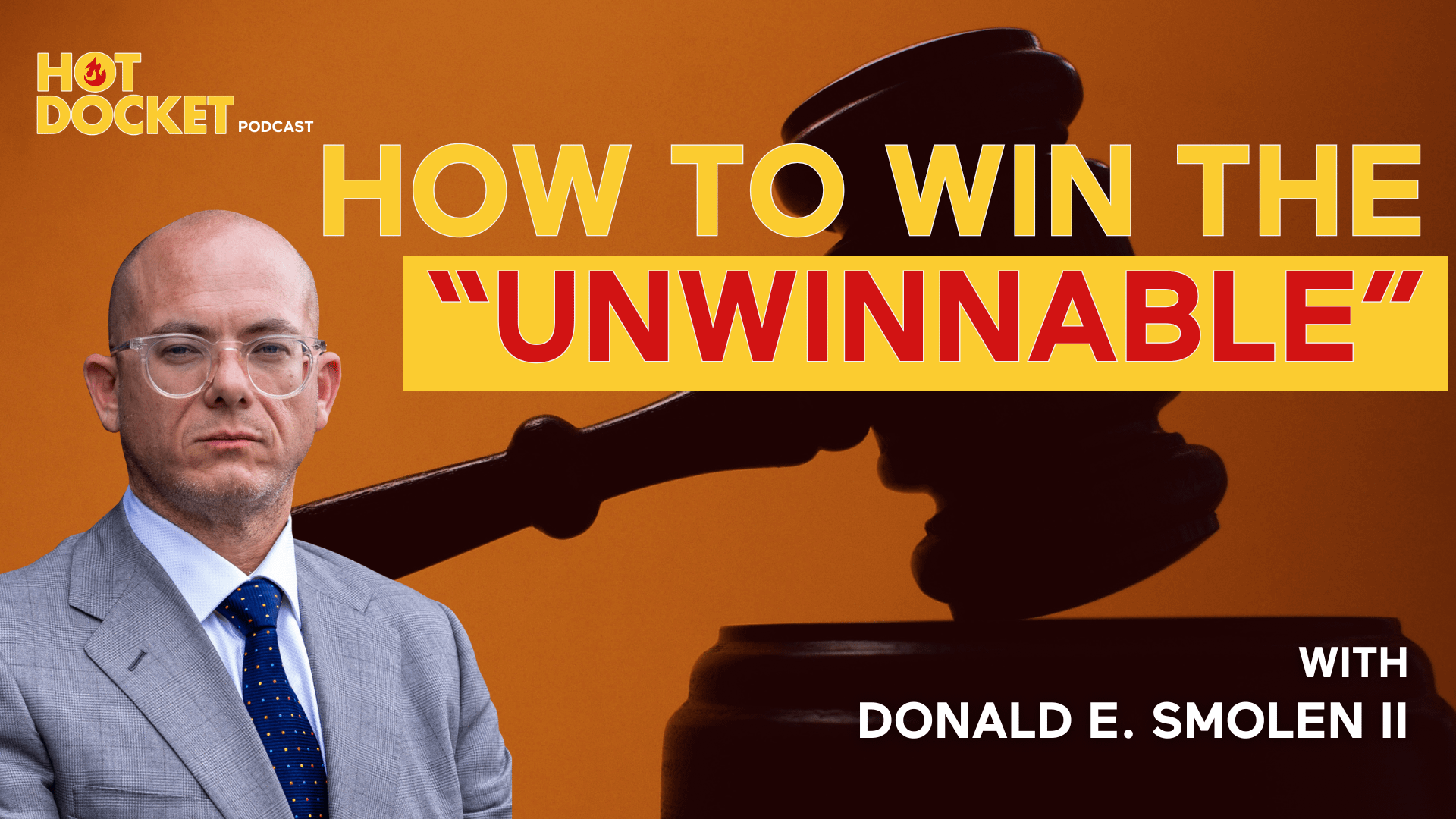
Episode Overview
- How to build a law firm on lawyer referrals and complex, high-value cases
- The business opportunity in rejected or “unwinnable” claims
- Inside the world of catastrophic torts, nursing home abuse, and med mal litigation
- Why empathy, persistence, and expert teams win where others quit
- The hidden truth about insurance, hedge funds, and for-profit care facilities
- Practical jury selection strategies from one of Oklahoma’s top trial lawyers
- How to turn difficult cases into firm-defining victories
Episode Links
Want to hear more from elite lawyers and industry-leading marketers?
Follow us on Social Media for more
Episode Topics
Tune in to learn:
- How to win complex personal injury cases other firms turn down
- The secrets to building a referral-driven law practice
- Inside the world of nursing home abuse, medical malpractice, and wrongful death litigation
- Practical strategies for handling uninsured or “judgment-proof” defendants
- Jury selection insights that give trial lawyers a real competitive edge
- The business model behind scaling a mission-driven personal injury law firm
Episode Transcript
Expand Transcript


[00:00:00] Donald Smolen:
I've got some crazy ones going right now. Memory care patients that elope out of a facility and one of them fell and hit his head and died. I mean, how do you get out of a memory care unit with no one seeing you? And he had been outside for eight hours and so we just get a lot of crazy stuff like that.

[00:00:16] Donald Smolen:
Stuff that clearly shouldn't happen, but. And most firms don't wanna mess with it. If it's not a car wreck, they don't want to deal with it.

[00:00:24] Bobby Steinbach:
Welcome to Hot Docket, the show where we talk about winning marketing strategies that have built the most successful law firms.

[00:00:29] Andrew Nasrinpay:
Join us every two weeks for the latest trends and tactics to grow your law firm.

[00:00:34] Andrew Nasrinpay:
Welcome to the Hot Docket. Today we've got Don Smolen from Smolen Law. And we're gonna have some interesting conversations about the cases that are few and far between a lot of the cases that most firms would turn down or more of the difficult complex cases. Uh, it's a pleasure that we have Dawn on today.

[00:00:53] Donald Smolen:
Thank you.

[00:00:58] Donald Smolen:
Well, it's a pleasure to be here. I appreciate you guys very much for having me on the show.

[00:01:02] Andrew Nasrinpay:
All right, Don, do you want to give your background quick and why you became a lawyer and your whole journey to justice?

[00:01:08] Donald Smolen:
Sure. I, uh, I became a lawyer 'cause I flunked out of pre-med. Um, that's what I, that's how I always start off.

[00:01:17] Donald Smolen:
I, uh, I went to school thinking I was gonna be a pediatric orthopedic surgeon and, uh, got to, got to tu and had never partied before and just went nuts. And so I flunked out of pre-med. And I happened to be, my advisor just so happened to be the head of the political science department and he's like, look, just come take this class, see how you do.

[00:01:42] Donald Smolen:
And it was a class on the first amendment and the separation at church versus state, and I just loved it. Um, and, uh, you know, as compared to my pre-med route, uh, I actually did good in the political science stuff. And so, um. I was already married, uh, and had my youngest, or my oldest was already born at the time.

[00:02:07] Donald Smolen:
And so I knew with a political science degree, I either do, I could be a teacher or an attorney. And, uh, and with my, uh, with my wife and her, uh, spending habits, I knew I needed to be something other than a teacher. So that's, that's the route I went. Um. During school, all I wanted to do was domestic law. I got outta school.

[00:02:35] Donald Smolen:
I wanted to be the king of domestic. I did it for a month and I absolutely hated it. Um, uh, and so I didn't know what I was gonna do. The, the firm I had started out with, um, I was supposed to get health insurance for my family as part of. The package, the compensation package, and um, after my wife got pregnant with our second son, they informed me they weren't gonna pay for it.

[00:03:08] Donald Smolen:
So I, uh, I got a job at Dillard's in the mall, in the shoe department at night and on the weekends, uh, because it's the only job I could get. You know, like you got a law degree, you're an attorney and you're sitting there making applications at pizza places and everywhere else just to make some supplemental income and, and people look at you like it's a joke.

[00:03:32] Donald Smolen:
But I, I got it and I was very happy I had it. Uh, a gentleman that, uh, ran a, a very large firm in Tulsa, uh, heard about this all going down. Uh, his name's Hanson Durrani. Um, and he came and found me and said, I want you to come work for me. And so I did. And, um, he was a big advertising guy, did a ton of car wrecks, did not have anyone doing his workers' comp.

[00:04:05] Donald Smolen:
So that's what, that's what I got hired to do was, was workers' comp. Uh, I had no idea how to do it. Uh, and he, he wasn't a litigator. Uh, he, he's an extremely smart businessman. Uh, he's still one of my best friends. We still do a ton of work together, but he didn't know what to do as far as depositions. He didn't know what, like I was on my own.

[00:04:28] Donald Smolen:
So I would go down to the workers' comp court every day and just watch, and I'd read a bunch. And, uh, and I just kind of just figured it out. That's, and that's, that's how I started trying cases, you know, uh, and as, as the practice developed and I ended up going out on my own, um, I went out on my own a year later.

[00:04:54] Donald Smolen:
Um, but I still had the same arrangement with him where I still did all of his workers' comp and he just. I just was self-employed instead of working for him. So, uh, I had two kids at the time. We ended up moving in with my mom. I had 2,500 bucks, uh, in savings and we, we rented this little tiny office and my wife.

[00:05:19] Donald Smolen:
Was my paralegal and she has no idea how to be a paralegal. Uh, we'd take the baby, uh, every day to work with us, and then when clients would, would come to visit, she'd have to leave the room because we only had the one room. Um, and so over time it started to grow and it, it just started growing exponentially.

[00:05:42] Donald Smolen:
Um, we, one thing I saw in the context of, of. These workers' comp cases was, there was a lot of, um, uh, there was a lot of overlap. And what I mean by that is, you know, I'd have a client that was an African American woman who was over 40, um, got hurt at work, fired. Uh, so, you know, and then, you know, her and her old man would get in a fight.

[00:06:13] Donald Smolen:
There'd be all of a sudden there'd be a domestic protective order. There'd be a criminal case. And I saw all these firms, uh, PI firms that would farm that stuff out to somebody else. And I thought, well, why not keep it all in house and just do it all? And for the majority of that stuff just get paid out of what I get 'em on the workers' comp.

[00:06:37] Donald Smolen:
And so I, I would turn these comp cases into a retaliatory discharge case, uh, a Title VII discrimination case. If they got hurt and I could turn it into a products case, I would, uh, if the doctor screwed up and it was medical malpractice, I'd turn it into one of those. Uh, I'd represent her on the protector order.

[00:06:56] Donald Smolen:
So it just, like, it, it was, I was happy to do anything I could to make a living. And so I got, I kept all these cases that I saw these other lawyers referring out. Uh, another thing I did was I started taking cases from lawyers cases Nobody wanted. Okay. Uh, cases that everyone saw, uh, everyone thought was just crap and I was, I was working 'em, and I would find angles and I would get paid on 'em.

[00:07:29] Donald Smolen:
And so, uh, not only would I get paid on 'em, but I'd pay the referring lawyers what I told 'em I would pay 'em, which, uh, is very easy to do, but surprisingly doesn't happen very often. Um, uh, and so now my business is probably 85% lawyer referral. Um, and, uh, and it's great. I love it that way. I, I do all the, uh, all the catastrophic tort litigation for the three biggest advertising firms in the state.

[00:08:03] Donald Smolen:
Um, I get a lot of my own business just off of trials we've done and, and, and exposure that some of our cases have gotten and, and. I feel like our, my clients are very happy with what they get. I love my people. Uh, these lawyers that refuse to talk to their clients, I don't get it. Um, I mean, I, uh, from day one, I've, I've told people this is a customer service industry.

[00:08:30] Donald Smolen:
We work for them. Um, and, uh, and so it's gotten to a place where. I, honest to God, get to do the craziest cases, cases that I thought in law school. Man, if I could just get one of those I'd, I'd, I'd be just ecstatic. And I've got hundreds of them and, uh, and I just, I really have fun with what I do.

[00:08:57] Bobby Steinbach:
What's one of those craziest cases?

[00:08:59] Bobby Steinbach:
Can you give a little more like, detail on what's one of those craziest cases?

[00:09:03] Donald Smolen:
So I had one case where, um. My client was, uh, she, she was bipolar, schizophrenic, had a total meltdown at one of the hospitals here. And so they got her voluntarily committed. Well, when they got her voluntarily committed, they didn't realize they didn't have room on the psych ward to put her, so they just put her up in a, in a general room.

[00:09:32] Donald Smolen:
And, um, during her stay there, a nurse tech. Tried to rape her and, and was caught, thank God. Uh, another, another nurse walked in while he was trying to rape this poor lady and, um, got caught. He ends up getting put in prison, um, uh, for attempted rape and, and we pursued the case against the hospital. Um, you know, and in Oklahoma, uh.

[00:10:06] Donald Smolen:
Typically a sex crime you can't hold an employer responsible for. Okay. Um, but there's some exceptions to that. And what I found out was this nurse tech had worked for the hospital before through a temp agency and had been fired for hitting a patient, but came back and applied directly later. With the hospital.

[00:10:34] Donald Smolen:
And since they didn't have a system in place to check if they'd ever been there, they hired 'em. Hmm. And so, um, you know, that was one that was a crazy case. Uh, I did the, uh, my brother and I both did the Eric Harris case where, um, um, there was an older gentleman that. Was a reserve deputy with the Tulsa County Sheriff's Department who bought him all their, like a bunch of different patrol cars and stuff, and they let him play cop and he ended up, uh, shooting and killing someone during a, uh, when they were trying to, uh, arrest a guy because he accidentally grabbed his gun and not his taser.

[00:11:18] Donald Smolen:
And so. That was a, that, uh, that was a crazy case. The, for, for years, Tulsa County Sheriff's Department kept us so busy. Um, I had another one where my guy had a mental breakdown and was, instead of taken to the, the Tulsa County Behavioral Health was, was, was put in the Tulsa County Jail. And the first night he was there, uh, he rammed his head into the wall.

[00:11:48] Donald Smolen:
And unbeknownst to them, he'd broken his neck. And so he's laying on the ground. They're telling him that, uh, they don't believe him, they think he's faking. Uh, so they move him to the suicide cell so they can watch him. So over the next 51 hours, they watch him as his, uh, nervous system slowly starts to shut down.

[00:12:17] Donald Smolen:
Uh, they, I got video of them throwing food at him. They'd put water six inches from his hand, and you can see on the video, you know, him trying to, to dip his fingers in the water just so he could put 'em back on his lips. Um, and he ended up dying and it was all on, all on video. Um, and, uh, we ended up trying that case.

[00:12:42] Donald Smolen:
Um, we got. There was a private healthcare correctional healthcare provider that we resolved the case for, and then we got, uh, a verdict against the sheriff's department for 10.25 million, which in Oklahoma is a big, is a big lick. But those are some of the craziest ones I've had. I've had ones where teachers are molesting these kids.

[00:13:06] Donald Smolen:
And the teacher will be related to the principal. So every time the parents go and are complaining about this teacher, the principal doesn't do anything 'cause it's his kid. Uh, that guy now is in, in a federal penitentiary. Um, I've got another one with a school where, uh, another teacher, another male teacher, molested a bunch of kids and, you know, it was being reported over and over again and they didn't report it to the state.

[00:13:35] Donald Smolen:
Even though it's mandatory to be reported, they tried to cover it up. And so I, I find it's interesting that a lot of these public schools are now kind of doing what the Catholic Church did for so long, which is hide it, you know, move them around. Like if you had a problem with a priest, you'd send 'em to a different parish.

[00:14:00] Donald Smolen:
Well, you got a problem with the teacher, now you send 'em to a different county. Right, the different school system. And so, uh, those are some of the, the crazier ones we've done. Um, I had a, a scissor lift case where young guy with six kids was working as a temp and, uh, uh, they wanted him to replace a hydraulic hose on a scissor lift.

[00:14:27] Donald Smolen:
And no one had shown him how to do it. No one had shown him how to lock it out. They just let him go do it. And so he removed the hydraulic hose without any lockout in place and the scissor lift came down on him and he ended up suffocating to death. Um, we went and tried that case and I had a scissor lift brought in.

[00:14:48] Donald Smolen:
We had a mini scissor lift brought in and we were able to reenact exactly what happened. And, uh, on the sixth day of trial, that case resolved. So, so those are kind of some of the ones I've got, I've got some crazy ones going right now. Uh, memory care patients that elope out of a facility and, and one of them fell and hit his head and died.

[00:15:12] Donald Smolen:
I mean, how do you get out of a memory care unit, uh, with no one seeing you? And, and, and he had been outside for eight hours and so. We just get a lot of crazy stuff like that, stuff that clearly shouldn't happen, but does, and most firms don't wanna mess with it, you know, if it's not, if it's not a car wreck, they don't want to deal with it.

[00:15:33] Bobby Steinbach:
So these are all coming in. Attorney referral,

[00:15:36] Donald Smolen:
most of 'em, most of 'em are attorney referral. Um, but a lot of 'em we get to, because when these verdicts come out, um. You know, they get, they get a lot of attention and, and, and so we get clients calling based on, based on that as well. Um, and just word of mouth.

[00:15:58] Donald Smolen:
I mean, I don't advertise, I don't do anything, you know, uh, I just, I just represent people and love doing it. Um, but, uh, if there's a crazy weird case, chances are I'll be the one that gets it and we'll file it. It's just kind of how things have, it's just kind of how it's developed.

[00:16:19] Bobby Steinbach:
It reminds me of like, salt Monga, Lucy, uh, or Monga Luzi, or however you say it, the building collapse guys.

[00:16:25] Bobby Steinbach:
Like, uh, you just know if you have that case type, those are the guys who are gonna get it. 'cause they've established their pedigree there.

[00:16:32] Donald Smolen:
Yep.

[00:16:32] Bobby Steinbach:
And, uh,

[00:16:33] Donald Smolen:
yeah, and, and, and it's, you know, it's funny, I always laugh because, um, I don't use the term personal injury. Because to me, uh, that's not what I do. I understand why a lot of people do use the term and I get it.

[00:16:49] Donald Smolen:
Um, but you know, most of these cases aren't, aren't these little dinky, you know, low impact fender benders. These are cases where people have either died or they wish they were dead. And uh, and you know, they've got thousands of attorneys to choose from and they're picking us. And that's a big deal to me.

[00:17:11] Donald Smolen:
Um, you know, I've, I've gotten to a place finally where now I have a retired orthopedic surgeon in-house on staff that helps with all of our medical cases. I've got a, uh, uh, a former risk management nurse, uh, that was at one of the major hospitals for a decade that that's in-house now too. And so everything is centered around, um, catastrophic type injuries, whether it's.

[00:17:38] Donald Smolen:
You know, a big semi-truck case, a medical malpractice, nursing home products. Uh, we, we tried a big case against John Deere a few years ago where a young guy had, um, he was on one of these small utility tractors and it rolled and, and pinned him, and he suffocated the death, you know, at the time he had a nine month old baby.

[00:18:00] Donald Smolen:
And, um. That case we, we mediated, uh, John Deere's top offer before trial was $5,000. Um, and we ended up getting a verdict for 5 million. And so, uh, just taking on stuff like that, stuff that most people don't wanna mess with 'cause it's not easy. But, um, but you know, these are people that really need help.

[00:18:27] Donald Smolen:
These are people that go to 2, 3, 4 firms. And get sent away. And, and then, you know, whether it's by word of mouth, referral, whatever, end up here, and we're able to really turn something into, you know, turn these situations that are really bad into something that's very positive. Um, and that's, that's probably my favorite.

[00:18:51] Donald Smolen:
Like when we, when we're able to set up kids better than they would've been set up, had their parent lived. It says a lot. Obviously you'd always, you'd always rather have your parent, but like for kids to be able to pay, go to college, get their first house, stuff like that, that's a big deal. Um, because those are all opportunities that they wouldn't have had had it not been for this horrific event in their lives, usually the worst event they've experienced.

[00:19:20] Donald Smolen:
Um, and so, you know, it's rewarding to do that. It's, and it's fun. I love trying cases. Um. Um, and just not many people want to try 'em anymore.

[00:19:32] Andrew Nasrinpay:
Yeah. Can you tell us a little bit more about the, um, nursing home abuse cases and how you're just seeing more of those nowadays?

[00:19:41] Donald Smolen:
It is, it has gotten, I would say, almost out of control.

[00:19:47] Donald Smolen:
Um, I have seen so many. Um, pressure injury cases or decubitus ulcers, whatever you wanna call 'em. Uh, bed sores. Um, people that are on, uh, fall risk, fall watch who end up not being watched and fall and hit their heads and die. Um, people just being left in their own waste for hours and hours and hours.

[00:20:15] Donald Smolen:
People being left. In these facilities for hours on end with no one there to check on 'em, no one to feed 'em. Um, it, it's, I am shocked with how busy I am with those cases. Uh, and it's the same facilities over and over again. It's not, um, you know, these aren't isolated events and, and I think what you see is, you know, they're paying people minimum wage.

[00:20:46] Donald Smolen:
To go in and white people's butts, what do you expect's gonna happen? They're not gonna do that. And I get it. I mean, you know, uh, but they, now that these hedge funds have started buying up these, these nursing homes, these long-term acute care facilities, the quality of care has even gotten worse. Um, and it's because it's all about how much profit can we make?

[00:21:11] Donald Smolen:
Uh, and they make a killing anyways. Why not get some people in there that are qualified and actually take care of these people? Uh, it, it's gotten to the point in Oklahoma where I, I told all four of my sons, uh, that I wrote in the will that if any of 'em put me or their mother in a nursing home, they're out because there is no way I would go into one of those facilities.

[00:21:36] Donald Smolen:
It's, it's, it's really sad. Like, uh, you know, these are people that, this is the, the last part of their life and, you know, most of them have had great lives and, and, and deserve to go out with a, with, with a very positive bang, so to speak. And they're sitting there, you know, they, they, you know, a lot of it's rehab stuff where they've gotten a hip replacement or something.

[00:22:02] Donald Smolen:
They go in there and they fall and they die. I mean, stuff that just shouldn't be happening. And. There's really no deterrent, at least in Oklahoma. I mean, you can file your complaints and stuff and, uh, you know, nursing homes in Oklahoma don't have to have insurance. Uh, they don't have to have liability insurance.

[00:22:20] Donald Smolen:
Uh, it used to not be that way. And then one of our legislatures that owned about 20 of 'em that was a doctor, managed to get it passed, uh, that you don't have to have it. So now a lot of these places like, well, what are you gonna do about it? No one's gonna sue us 'cause we don't have insurance. Well, the ones that don't, I still sue.

[00:22:41] Donald Smolen:
Uh, and I still go after 'em because those places, there's big money behind all those places. The days of the mom and pop, you know, we own one little nursing home that takes care of 20 residents. It's just not around anymore. And so, um, you know, some of these, some of these facilities, uh, the, the money that owns 'em behind the scenes, the hedge funds and the.

[00:23:07] Donald Smolen:
Uh, it, it is crazy how commercialized they've made medical care. Um, and you see it, you see it with these big hospitals too, getting bought up. You know, um, I, we have a bunch of, uh, hospitals in Tulsa, most of which are affiliated one way or another with the Catholic church. Well. These aren't, these aren't the hospitals where, you know, the nuns were running around 30 years ago trying to make sure everyone was well taken care of.

[00:23:40] Donald Smolen:
Uh, they still want you to believe that, but now you've got these groups that own 30, 40, 50 different hospitals across the country just coming in and, uh, micromanaging the healthcare. And so the result has been a complete. Um, desecration of, of their duty to these, these patients and in the care that they're provided.

[00:24:06] Donald Smolen:
Um, and it's, it's pretty disturbing. Um, you know, we do cases in other states too. We do Arkansas, Missouri, uh, Kansas, Colorado, and, uh, even though the quality of care in most of those states continues to deteriorate, nothing's deteriorating like it is in Oklahoma. Um, and, and it, it's just bothersome. You know, like I had one lady, sweet, sweet lady.

[00:24:35] Donald Smolen:
I still, the case is still going. They were married 55 years. Her husband had to go in for, uh, into assisted living. It was during COVID. He's a fall risk. They take him to the bathroom and leave him alone in there and he falls and hits his head and dies. She never, 55 years of being married, and she never gets to say bye to 'em.

[00:24:59] Donald Smolen:
She, you know, like, just, it, just stuff like that, that, that, to me, it, it just blows my mind that these people are having to deal with these kinds of things, things that are completely preventable. Um, but it's, it's a real issue here.

[00:25:17] Andrew Nasrinpay:
Hmm. In those cases where the nursing homes don't have insurance. What? What is the typical path like in those instances?

[00:25:28] Donald Smolen:
So fortunately I haven't had a ton of them. Okay. The ones I do have though, and have had, I just go all the way and then they either settle it or, I mean, I will go, I will go down and do a garnishment action and have all these facilities assets sold. Like, I'll get 'em one way or another. If you treat someone so poorly and you piss me off so bad to the point where I'm coming after you, whether you have insurance or not, I'm gonna get paid.

[00:26:02] Donald Smolen:
Uh, and we do, um, uh, you just have to, you know, it's the, it's the usual. You gotta find where all the money goes because the reality is, you know, by the time they've, they've, uh, done their shell game and you've gone through five different. Entities as far as your payments, you, there's plenty of money there.

[00:26:24] Donald Smolen:
Uh, you just have to find it and go after it.

[00:26:27] Andrew Nasrinpay:
Yeah, and that's what we've been

[00:26:28] Donald Smolen:
doing.

[00:26:29] Andrew Nasrinpay:
I, I'm just surprised that like big money would do it that way, right. Where they could just keep the insurance for when bad actions like this happen. I mean, that's the point of it. And they clearly have the money. The insurance is somewhat there to protect.

[00:26:47] Andrew Nasrinpay:
Bim Sure too. So it, it's crazy to me that they would try to structure it that way.

[00:26:53] Donald Smolen:
It is. But you know, it's kinda like, uh, it's kinda like these big, uh, oil and gas companies when they're skimming off of royalties. Okay. Yeah. They think, all right, we make billions. Off of cheating these people, you know, uh, padding our costs, doing things that affect the amount of di of, uh, royalties that are paid out.

[00:27:19] Donald Smolen:
Okay? So we get caught here and there, a hundred million here, a hundred million there. On these big class claims, they're still making billions. And so it's the same deal. It's, hey, most lawyers aren't gonna screw with us if they know we don't have insurance. We're not gonna have to pay out ungodly amounts and premiums and so we'll just take our licks when we get 'em and you know, that's fine, that's fine if you're someone like me.

[00:27:48] Donald Smolen:
But. You know, most lawyers aren't gonna do that kind of work and risk. I mean, I'm just as happy to make a, a nursing home file bankruptcy as I am getting paid on a case, uh, because it's just, it, it just pisses me off. And I'm, I'm from Oklahoma. I was born and raised here, and I don't like to see these people get taken advantage of.

[00:28:16] Donald Smolen:
These facilities charging seven, eight, $9,000 a month and you can't pay someone to stay awake overnight to make sure they're not getting outta the facility. That's a problem.

[00:28:30] Andrew Nasrinpay:
Yeah, that's wild.

[00:28:35] Andrew Nasrinpay:
Do you wanna tell us a little bit about any of the med mal claims and how that works in Oklahoma?

[00:28:42] Donald Smolen:
So, medical malpractice in Oklahoma is really difficult. And, uh, the reason why it's difficult is because those same facilities I talked about a moment ago are ingrained within our communities. Okay. Um, no one likes to think doctors screw up.

[00:29:03] Donald Smolen:
Okay. I don't wanna thank that a surgeon screws up when I'm getting ready to have a surgery. Um, even though I go outta state. Um. But people don't like to think, oh, doctors make mistakes, but they do. And what they don't realize is that just like, um, just like somebody running a red light is a deviation from the standard of care.

[00:29:29] Donald Smolen:
So is practicing medicine below that a similar standard? It's the same thing, you know, uh, when, when they go in and, and, and, you know, they're doing a, a bowel resection and, and, and they don't do it properly and there's an anastomotic leak that happens and all this stuff goes south. Well, the way they perform that surgery is no different than someone running a red light.

[00:29:54] Donald Smolen:
But getting a jury to understand that is extremely difficult. And so what you see is, for the most part, the really, really big medical cases get resolved before trial. Some of some of them don't, and, and you'll see I'd say maybe 10 to 20% of the verdicts come out in favor of a plaintiff on a medical case in Oklahoma.

[00:30:20] Donald Smolen:
Um, but most of those cases that get tried result in a defense verdict. For these same reasons. Doesn't matter how good the lawyer is, but you still have to keep trying 'em because one, you took the case and you told these people you're gonna try it. And two, you know, yeah, you may lose nine outta 10, but the one outta 10 that you hit 'em on, it's gonna hurt.

[00:30:46] Donald Smolen:
And so, um, and so we do a lot of medical malpractice here. Uh, one. Because a lot of lawyers won't do it, and these people need help. Two, we've got the resources to do these cases and to do 'em the right way. Um, uh, and then it is just a really, they're really sad. I had a guy that went in for a stent, uh, because he is, uh, or needed a stent.

[00:31:12] Donald Smolen:
He was having a heart attack and he ended up having, uh, open heart surgery. They had an aortic dissection happen, uh, that was missed. Um. You know, late fifties working six figure job, which in Oklahoma is significant, ends up losing both of his legs, all of his fingers and his nose. And like, you know, you're going in, you're, you're going in to have a stent.

[00:31:45] Donald Smolen:
And you come out a paraplegic, not able to work again. His favorite thing to do was, was ride his Harley around. And so one of, one of the most exciting times for me was when he was able to, to, to buy himself a trike that we had outfitted to where he could ride it and he was able to ride again. But like people don't understand that when, when doctors make mistakes.

[00:32:11] Donald Smolen:
They're huge, huge, significant mistakes, um, but it, it's really hard to get 'em held accountable. And, and in Oklahoma, all of all of these doctors are, the majority of these doctors, they have what's called a consent policy, which means they have to consent to settlement because they know that if they settle, they're gonna get a hit on the data bank.

[00:32:33] Donald Smolen:
And so there's times where you end up having to go try case that should be settled just because the doctor won't settle it. Um, but you know, that's the only profession where they get to decide, uh, what happens as a result of their negligence.

[00:32:50] Andrew Nasrinpay:
That's pretty wild.

[00:32:52] Donald Smolen:
It's crazy in insurance drives a lot, uh, of the law and I know that that kind of is obvious, but, um, the way they lobby the legislature is crazy.

[00:33:11] Donald Smolen:
Um, you know, and to them the money's never enough. They wanna make more and more and more. And we do, we do a lot of insurance. Bad faith work here. And I mean, I had a case a year ago where, uh, we had these huge storms and the, this house was destroyed. They're screwing with this poor family, this girl who's, uh, getting ready to go into her senior year of high school, they're living in their car because their insurance company wouldn't pay the claim.

[00:33:45] Donald Smolen:
And it just, it's mind blowing. It's stuff, it's, most of these cases are, when I hear about them initially, I'm like, there's no way that happened. There's no way That story you're telling me is true. That's a bunch of crap. And then I find out it really did happen. Like it's just, it's shocking. Um, uh, because, uh, these carriers would still make a fortune even if they did the right thing and they can't help themselves.

[00:34:20] Donald Smolen:
If they're gonna screw someone over, uh, they're gonna do it and do it right. And, and it happens to everybody. My own insurance company tries to screw me over. I'll sit there and be like, guys, do you not realize how many times I've sued you for other people for the same crap? They just don't care because it's, it, it, it's, Hey, even if we get caught, there's all these other ones we didn't get caught on, so we're good.

[00:34:50] Donald Smolen:
And I just think that's a crazy, I think it's a crazy way, uh, to conduct yourself in a somewhat civilized society.

[00:34:58] Andrew Nasrinpay:
Alright. Quick question here. Nine out of 10 of the med mal claims the defense is gonna win in court. When you're picking a jury, um, for those claims, what are you typically looking for? Like, what is your ideal jury for a huge med mal claim in Oklahoma?

[00:35:18] Donald Smolen:
Um, I can tell you what I, what I don't like.

[00:35:21] Andrew Nasrinpay:
Yeah. What are you weeding out? That might be the easier way to go.

[00:35:25] Donald Smolen:
I, uh, I don't wanna be looking at 12 old white men, if I'm being perfectly honest. I had three civil rights cases in federal court where my juries were all white, and I, I was shocked. I'm like, how does this happen?

[00:35:42] Donald Smolen:
Like, you know, we're in, we're in the 2020s, how does this happen? But, but, you know, I like variety. It's supposed to be a jury of your peers. Okay. Uh, I don't wanna see just vanilla everywhere. And, and, and I don't want people that have the mentality of, well, if I'm not getting a dollar, I don't want anyone else to have one.

[00:36:05] Donald Smolen:
I, I think you want people that are gonna be open-minded that don't have this. Preconceived notion that doctors really don't make mistakes. It's kinda like, uh, it's kind of like criminal cases where the jury believes everything the district attorney says, right? Because, well, no one would've filed the charges if, if they weren't really guilty.

[00:36:28] Donald Smolen:
Uh, and what's funny is, is in, at least in Oklahoma, the majority of your med mal defense guys are former assistant district attorney prosecutors because all they see is black and white. They cannot see gray, and that's the way they present it. And so, you know, I just want, I want a jury that's gonna be fair that that.

[00:36:51] Donald Smolen:
That acknowledges doctors make mistakes just like people driving make mistakes, and that the doctor's mistakes are the same as, as, as if you get in a car accident or something similar. Like, um, there's kind of this, you know, this aura around these doctors that makes people think that they just do no wrong.

[00:37:12] Donald Smolen:
And I see time and time again where they take advantage of that. Uh, feeling within the community and they just roll the dice and, and most of the time they get lucky.

[00:37:25] Bobby Steinbach:
One quick follow up. So another person, another somebody we talked to when they said when they were picking a jury. This was criminal defense lawyer.

[00:37:35] Bobby Steinbach:
When they were picking a jury. They liked having relatives of cops on the jury because many times juries think of cops at like on a pedestal and cops can do no wrong. Having a relative of a cop, they, that person knows that that person can do wrong. They like they're humanized. You feel the same way for relatives of medical personnel.

[00:37:55] Bobby Steinbach:
Do you like having relatives of doctors on the jury?

[00:37:58] Donald Smolen:
I do not. I do not like having 'em on it. I do not like. Uh, but I don't like having relatives of cops on my juries either. Uh, just because I do so much, uh, civil rights litigation and, and, uh, that, that usually somebody has read a story or knows, knows that one of these other cases.

[00:38:21] Donald Smolen:
Uh, but no, I don't like, I don't want anyone to bring in their, uh, experiences as far as like, you know, like I've had ones where nurses have been on. I've been on the panel that we get removed. Um, uh, I, on that scissor lift case, I had a doctor that was on the, in the jury pool and after I got him to explain what somebody goes through when they suffocate the death.

[00:38:50] Donald Smolen:
Um. The, the, the defendants decided that they didn't want him on the jury. And so, uh, but normally I don't, normally I just like normal people like blue collar, you know, no bs. They know what's up. Um, uh, that's what I prefer, just real people.

[00:39:12] Andrew Nasrinpay:
I think it's so interesting on the jury selection side because ultimately it comes down to.

[00:39:18] Andrew Nasrinpay:
That lawyer who's gonna be, you know, going to trial and the comfort level they feel and like their brand. So it's gonna be totally different for

[00:39:27] Donald Smolen:
it

[00:39:28] Andrew Nasrinpay:
for everybody. I,

[00:39:30] Donald Smolen:
jury selection is such an enigma to me. Like you, there's all these books out there about like, you know. What color suits to wear, what color ties to wear, what color suits to wear, how to act, you know, how not to act.

[00:39:44] Donald Smolen:
Do you wear cuff links? Do you not wear cuff links? You know, like there's just so much, you know, um, some of these rural counties, you know, I love to wear my cowboy boots, but by God I make sure they've got some dirt on 'em. Right? You don't wanna be the guy that shows up with brand new boots, but like, uh, at the end of the day, I think it's a crap shoot.

[00:40:04] Donald Smolen:
Like I really do. Like, I, I think that as important as these juries are, it's really, really difficult to pick out a good one. Right? To pick out a good jury because you know, guys and, and, and girls that. PE lawyers that try these cases, they'll tell you it only takes one or two times of that juror sitting up there like you think, you think that they are buying everything you're giving 'em and they're just sitting there taking it in and then you realize he ends up being in the foreman and screws you.

[00:40:40] Donald Smolen:
I mean, it's just, you just like, you got people that wanna be on the jury and so they lie about, uh, you know, their biases. Uh, just the whole process. You know, I've got three or four lawyers that just during voir dire sit there on their computers and, and do a deep dive on all these people, you know, and, and we're all looking at our Google sheet that we share as it's in real time.

[00:41:05] Donald Smolen:
And so we're trying to pick who to kick off and who not. It's, it's just a pretty crazy experience. Um, but it's a, it's a very fun one as well.

[00:41:15] Andrew Nasrinpay:
Alright. I, I think that's pretty good where we are here. Um, thanks for joining us on the Hot Docket. Uh, it's been a pleasure talking to Don. I, I learned a lot about both jury selection and the laws in Oklahoma.

[00:41:28] Andrew Nasrinpay:
Uh, everything was great and I'm really happy to have you on.

[00:41:32] Bobby Steinbach:
We hope you've enjoyed this episode of Hot Docket. We're your hosts, Bobby and Andrew, founders of Meme Pug, the marketing agency for ambitious law firms.

[00:41:40] Andrew Nasrinpay:
Have questions about marketing or anything we covered today? Email us at mark@memepug.com.

[00:41:46] Andrew Nasrinpay:
Be sure to subscribe to learn more. Until next time.